Zone Air vs MrCool DIY: Which One Is Easier to Install?
“DIY” on a mini-split label can mean anything from a homeowner-friendly quick-connect system to a conventional installation that still requires refrigerant tools, careful flaring, and an HVAC technician for commissioning. That distinction matters more than the brand name when you’re comparing Zone Air vs MrCool.
MrCool is widely associated with pre-charged, quick-connect line sets designed to simplify refrigerant connections. Zone Air systems and packages can vary, so check the exact model and included line set rather than assuming every offering follows the same installation method. Pioneer is another brand worth comparing, but its installation requirements also depend on the specific system.
The practical question is not simply, “Can I do this myself?” It’s: What tool does this really require? A quick-connect line set may spare you from making refrigerant flares, but it does not necessarily eliminate the need for electrical work, mounting, permits, code compliance, or careful commissioning. Here’s how to judge which option is easier for your home—and less likely to ruin a weekend.
What “DIY Ease” Really Means
People often use “easy to install” to describe several different jobs as if they were one. In reality, a mini-split installation involves separate mechanical, refrigerant, electrical, and finishing tasks.
- Mounting: Installing the indoor head and outdoor condenser securely, with the right clearances.
- Wall penetration and drainage: Routing the line set and drain without damaging the structure or creating water problems.
- Refrigerant connection: Connecting a pre-charged line set or preparing conventional refrigerant lines.
- Electrical work: Providing the correct circuit, disconnect, wiring, and grounding.
- Commissioning: Checking the installation and confirming the system operates correctly.
A system can be DIY-friendly in one category and still require professional help in another. A quick-connect connection does not make a new branch circuit magically appear. Nor does a plug on one model mean every unit in the product family plugs into a standard household outlet.
MrCool DIY: What the Quick-Connect Approach Changes
MrCool’s DIY line is known for pre-charged quick-connect line sets. The refrigerant is contained in the system and line set as designed by the manufacturer, and the connections are intended to be made without the usual field-flaring process. For a homeowner who wants to avoid learning how to flare copper and work with refrigerant, that can be a meaningful reduction in complexity.
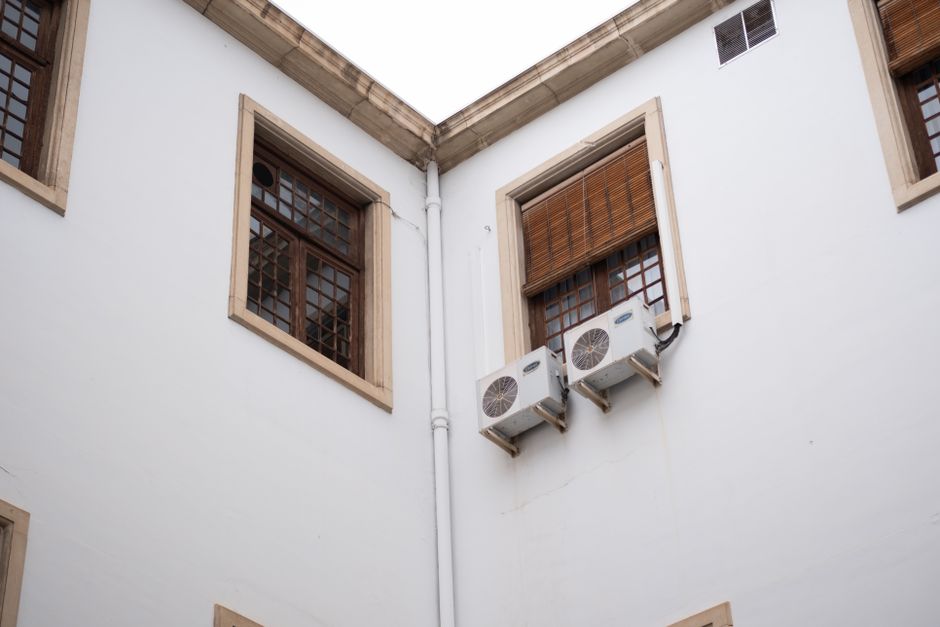

“Pre-charged,” however, does not mean “no installation decisions.” You still need to handle the line set carefully, route it without kinking or damaging it, make the specified connections correctly, and follow the manufacturer’s instructions for that exact model. A quick-connect system is not permission to improvise or reuse incompatible components.
Do you need a vacuum pump or manifold gauges?
For a system installed exactly as the manufacturer’s quick-connect instructions specify, the installation process may not call for the homeowner to evacuate field-installed refrigerant lines with a vacuum pump or connect manifold gauges in the conventional way. That is a major reason these systems can be more approachable for mechanically capable homeowners.
But don’t generalize that to all MrCool equipment, or to every system sold under a DIY label. If a particular model or installation method requires field-installed line sets, evacuation, pressure testing, or other refrigerant procedures, the appropriate tools and expertise matter. Confirm the manual’s requirements before buying. If the job calls for a vacuum pump and gauges and you have never used them, “I’ll figure it out on install day” is a reliable recipe for an expensive interruption.
Zone Air: Check the Exact System, Not Just the Brand
Zone Air can refer to different equipment and packages, and the installation experience depends on the specific model and line-set arrangement. Before comparing it directly with MrCool DIY, look for clear answers to these questions:
- Does the package include a pre-charged quick-connect line set?
- Is the line set fixed-length, or can it be cut and prepared for the actual route?
- Does the manual require flaring, pressure testing, evacuation, or refrigerant charging?
- What electrical supply does the exact indoor/outdoor combination require?
- Are a disconnect, dedicated circuit, permits, or licensed electrical work required locally?
If a Zone Air package uses conventional field-installed copper, it may be a better fit for a contractor or an experienced installer equipped for that work. That doesn’t make the product worse; it means the installation is less of a straightforward homeowner project. If the model includes a compatible quick-connect solution, the gap in DIY ease may be smaller. The model number and installation manual are more useful than a broad brand-level claim.
Fixed vs Custom Line Set: The Decision That Can Make or Break the Job
The difference between a fixed vs custom line set affects both installation flexibility and the likelihood of needing extra work. A fixed-length line set comes in a specified length. It may be convenient when that length matches your route, but awkward when the condenser is much closer—or farther away—than expected.
Line-set type Potential advantage Potential headache Best fit Fixed-length, often pre-charged Can simplify refrigerant connections and reduce specialized field work The available length may not suit the actual route; excess copper still needs to be handled as the manufacturer allows A layout where the specified length works without forcing a poor route Custom-cut field-installed copper Can be sized to the real installation route Typically demands proper preparation, flaring or brazing as specified, testing, and evacuation Installers with the correct skills, tools, and procedures
Do not assume you can shorten a pre-charged quick-connect line set just because it looks too long. Cutting or modifying it may compromise the refrigerant circuit or violate the manufacturer’s instructions. And don’t treat extra copper as something you can casually wad into a tight coil behind the condenser. Bend radius, service access, appearance, and the installation manual all matter. A bad line-set route can turn a clean job into the kind of eyesore you notice every time you mow the lawn.
Measure the real vacuum pump for mini split route before ordering: indoor head to wall exit, the path around corners, the outdoor unit’s location, and any rise or drop. Then compare that measurement with the approved line-set lengths and limitations. This is one of those small planning steps that prevents a big install-day surprise.
115V Plug-In Convenience vs 230V Hardwire Reality
Some mini-split models are designed for 115V power and may include a plug-in option. That can simplify electrical planning if the model’s instructions and the home’s existing receptacle genuinely match. But plug-in convenience is not the same as “no electrician needed.” The receptacle, circuit capacity, grounding, and installation location all have to be appropriate—and local rules may impose additional requirements.
Other models require 230V power and a hardwired connection. That commonly means planning a suitable circuit and outdoor disconnect, and it may require an electrician. Even a 115V system may call for a disconnect or other electrical work depending on the installation, equipment instructions, and local code. Don’t count on a standard plug simply because a product listing uses the word “DIY.”
Before you buy, verify the electrical plan
- Confirm the voltage and electrical requirements for the exact model.
- Check whether the system is cord-and-plug connected or hardwired.
- Ask whether a dedicated circuit and outdoor disconnect are required.
- Find out whether your local code requires a permit or licensed electrician.
- Check that the outdoor unit’s location allows safe, code-compliant access.
Electrical work is one of the most common “stuff that ruins weekends” items: the equipment arrives, the mechanical installation is almost done, and then the homeowner discovers the nearest circuit is unsuitable. Find out the electrical requirements before placing the order, not after the condenser is sitting in the driveway.
Which One Is Easier to Install?
MrCool DIY may be easier for a capable homeowner when the specific system includes the manufacturer’s compatible pre-charged quick-connect line set, the route fits the approved length, and the electrical requirements are manageable. In that situation, it can avoid some of the specialized refrigerant work associated with conventional installations.
Zone Air may be just as manageable—or may call for a professional—depending on the exact unit and line-set package. If it requires conventional copper preparation and a standard evacuation process, expect the need for a vacuum pump, manifold gauges, appropriate fittings, and someone who knows how to use them. If the model includes a quick-connect setup, evaluate it on those actual instructions rather than on a general impression of the brand.
Pioneer is also worth considering if you’re comparing equipment, but apply the same test: identify the exact model, line-set type, electrical requirements, and commissioning procedure. Brand reputation alone can’t tell you whether a given installation is within your skill set.
Question Why it matters Is the line set pre-charged and quick-connect? May reduce the refrigerant work, but only if installed exactly as specified. Does the route match an approved line-set length? Prevents forced routing or an improper attempt to alter the line set. Does the system need 115V or 230V? Determines whether existing power is suitable or electrical work is needed. Does the manual call for evacuation or testing? Shows whether a vacuum pump, manifold gauges, and relevant experience are required. Are permits or licensed trades required? Local rules can change the real DIY scope and total project cost.
How to Choose Without Guessing
- Pick the equipment location first. Plan the indoor head, wall penetration, drain route, and outdoor unit position.
- Measure the line-set path. Include bends and the actual route, not just the straight-line distance between units.
- Read the exact installation manual. Look for line-set preparation, refrigerant steps, electrical requirements, and commissioning instructions.
- Price the electrical work before purchase. Get clarity on the circuit, disconnect, permits, and who is allowed to perform the work.
- Be honest about the tools and skills. If the installation requires flaring, evacuation, pressure testing, a vacuum pump, or manifold gauges, decide whether you can perform those steps correctly—not merely whether you can obtain the tools.
The Bottom Line on Zone Air vs MrCool
For diy ease, MrCool has an advantage when its particular DIY model’s pre-charged quick-connect line set fits the route and its electrical setup works for your home. That convenience can reduce the amount of refrigerant work, but it does not erase mounting, drainage, electrical, permitting, or code considerations.
Zone Air is harder to rank as a whole because the installation requirements depend on the specific model and package. A conventional custom-cut line-set installation is not the same level of DIY project as a compatible quick-connect system. Pioneer deserves the same model-by-model scrutiny.
The best choice is the one whose line-set length, power requirements, and installation procedure fit your room and your abilities. Before buying, answer the unglamorous questions: Will the line set reach without a bad coil? Is the unit really plug-in, or will it need 230V hardwiring and a disconnect? Does the job call for refrigerant tools or an electrician? Getting those answers up front is what turns “DIY” from marketing language into a project you can actually finish.
