What to Expect on Your First Visit to a Gin Bar
Walking into a gin bar for the first time can feel a little like arriving late to a conversation that has been going on for years. The shelves are often packed with labels you do not recognize, the menu may list tonic pairings and botanicals with surprising specificity, and the person next to you seems to know exactly why they asked for a Spanish-style serve with pink grapefruit instead of lime. If your own experience with gin begins and ends with a basic gin and tonic or the occasional martini, that atmosphere can be slightly intimidating.
It does not need to be.
A good gin bar is not built for experts alone. At its best, it is a place where curiosity is rewarded. The staff usually want you to enjoy yourself, not pass a test. Once you understand how these bars tend to work, the first visit becomes much easier, and much more enjoyable. You start noticing details that would otherwise blend into the background: the glassware, the style of tonic, the aroma released by a sprig of rosemary, the difference between a juniper-led London Dry and a softer, citrus-forward contemporary gin.
What surprises many first-time guests is that a gin bar is rarely just a bar that happens to stock gin. The better ones are shaped around the spirit in a deliberate way. Their menus, garnishes, mixers, and even the pace of service reflect that focus. Knowing what to expect ahead of time helps you order with confidence and get more from the experience.
The atmosphere is usually more thoughtful than flashy
Not every gin bar looks the same, but many share a certain kind of energy. You will often find a room that feels deliberate rather than chaotic. Lighting tends to be warm rather than harsh. Music may be present, but not so loud that you have to shout your order. The back bar is frequently the visual centerpiece, with rows of bottles arranged to show range and character, not just brand recognition.
Some venues lean classic, with polished wood, stemware, and a menu that nods to cocktail history. Others take a more modern route, with stripped-back interiors and playful serves in balloon glasses. Either approach can work. The common thread is that gin gets treated as a spirit worth paying attention to.
That matters because your first impression often shapes what you order. In a noisy, crowded general cocktail bar, many people default to something familiar and move on. In a specialist gin bar, the setting itself encourages a bit more engagement. You may find yourself reading tasting notes, asking questions, or noticing the garnish choices on nearby tables. That is part of the appeal. Gin responds well to small details, and these venues tend to make those details visible.
You will probably see more gin styles than expected
One of the first things people notice is sheer variety. Even modest gin bars can stock dozens of bottles. More ambitious ones may carry well over a hundred. That range is not there for show alone. Gin has broader stylistic variation than many newcomers realize.
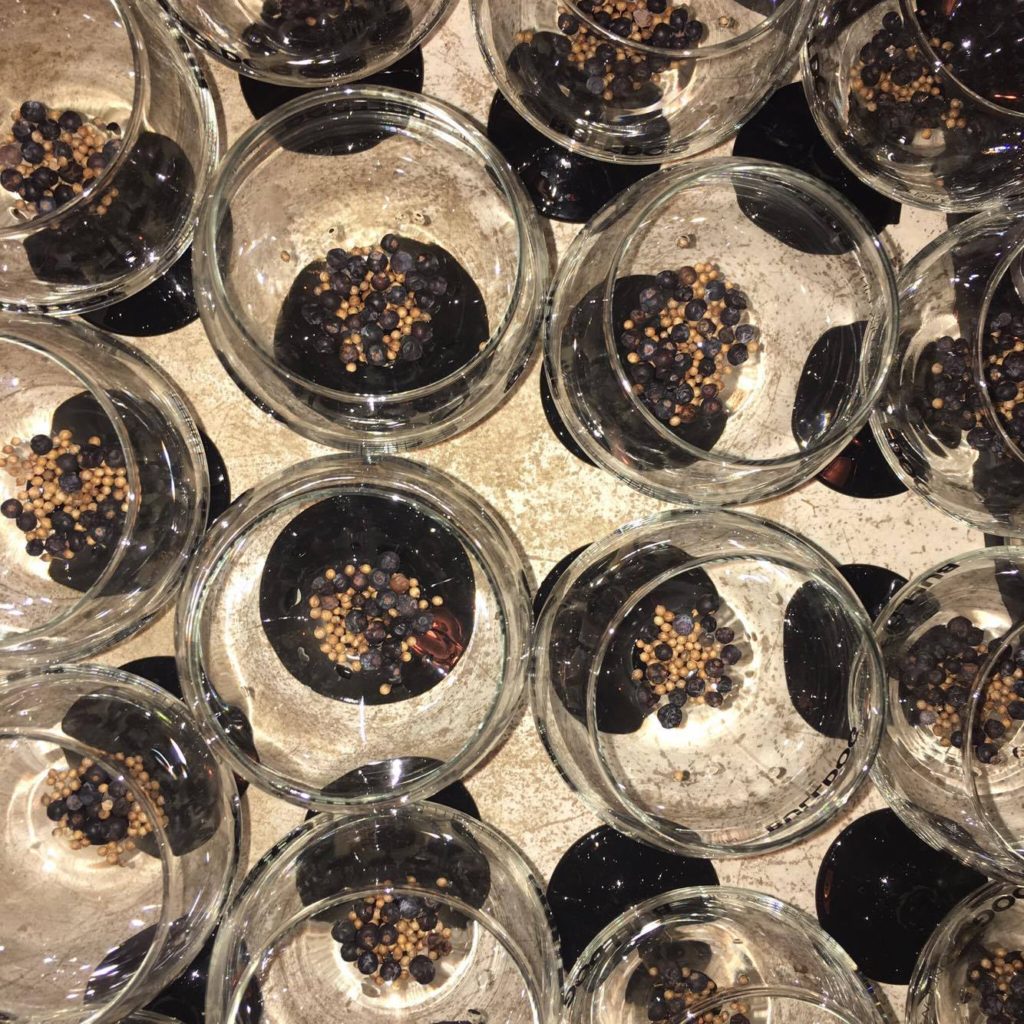
If you have only tried one or two mainstream brands, you may assume gin is always sharp, dry, and strongly piney. Juniper remains essential, but it is only one part of the picture. Depending on the recipe and production method, gin can lean toward citrus peel, coriander, angelica, orris root, cardamom, pepper, floral notes, tea notes, olive, sea herbs, or fruit. Some distillers pursue crisp structure. Others build something softer and more aromatic.
At your first gin bar visit, you do not need to master categories, but it helps to know a few broad lanes. London Dry is the style most people encounter first. It is typically dry, juniper-driven, and reliable in classic cocktails. Contemporary gins may dial juniper back and push citrus or florals forward. Old Tom gin tends to be rounder, sometimes slightly sweeter, and can shine in older cocktail recipes. There are also navy-strength expressions with higher alcohol, which bring extra intensity and can stand up particularly well in mixed drinks.
This variety is why a simple request like “a gin and tonic” may trigger a follow-up question. At a regular bar, you might get the house gin without discussion. At a dedicated gin bar, staff may ask what flavors you like, or offer you a few options at different price points. That is not upselling by default. Often it is a sign that the bar is trying to match the spirit to your palate.
The menu may read differently from a standard cocktail list
A first-time guest often expects a familiar cocktail menu with a handful of gin drinks tucked among the rest. Instead, a gin bar may organize its offerings by spirit style, tonic pairing, botanical profile, or serve format. You might see sections for martinis, G&Ts, house signatures, and short pours. You may also see notes beside each gin describing citrus, spice, herbal character, or floral intensity.
This can seem overdesigned at first glance, but it is often useful. Gin changes noticeably depending on what it is mixed with and how it is served. A classic Indian tonic with pronounced bitterness works differently from a lighter Mediterranean-style tonic. A lemon twist can sharpen a drink, while cucumber softens it and pulls out greener notes. The glass shape affects aroma more than people expect. A large bowl glass, for example, gives garnish and botanicals room to open up, though some drinkers still prefer the cleaner feel of a highball.
Menus at strong gin bars often reflect these decisions. Rather than simply naming a drink, they show the thinking behind it. That can feel unfamiliar if you are used to ordering quickly, but it gives you a better chance of getting something you genuinely enjoy.
Asking questions is normal, and smart
The best thing you can do on a first visit is be specific about your preferences, even if your vocabulary is simple. You do not need to know distillation methods or recognize ten botanicals by aroma. It is enough to say that you usually like crisp, dry drinks, or that you dislike anything too floral, or that you want something refreshing rather than boozy.
Bartenders at a good gin bar hear that kind of guidance all the time. It is far more useful than pretending to know more than you do. In practice, “I want something clean and citrusy” is a better starting point than picking a random premium bottle because the label looks serious.
A short conversation may save you from a poor match. I have seen first-time guests order an aggressively floral gin because the bottle was popular online, then spend the evening wondering why their drink tasted like perfume. I have also seen hesitant customers describe the kind of tonic they usually like, get pointed toward a classic juniper-led gin with a grapefruit peel, and immediately understand why people become loyal to the category.
One practical detail is worth knowing: staff may ask whether you want your gin in a mixed drink, a martini, or neat. If you are unsure, say so. Neat pours are useful if you want to learn, but gin usually reveals itself best for newcomers in a well-built long drink or a balanced cocktail.
Your first order does not need to be adventurous
There is a quiet pressure in specialist bars to prove you belong there. Resist it. Your goal on a first visit is not to impress the room. It is to find a drink that gives you a clear, enjoyable sense of what the place does well.
For most people, a gin and tonic remains the best opening order in a gin bar, provided the bar takes it seriously. That phrase sounds almost too basic, but at a quality venue, it is rarely basic at all. The gin will be chosen with intent. The tonic will likely be poured fresh and in the right proportion. The garnish will not be an afterthought. You will get a straightforward lesson in balance, dilution, aroma, and texture in a single glass.
A martini can also be a smart choice, though only if you already know you enjoy spirit-forward drinks. In a gin-focused room, the martini often functions as a kind of benchmark. It tells you a lot about the house style, the bartender’s precision, and the character of the gin itself. For some first-timers, though, it is a demanding place to start. Cold, clean, and aromatic can quickly turn into sharp and severe if you are unprepared for how little softening there is.
If neither of those appeals, ask for a house cocktail that showcases gin without burying it. Many bars have one or two drinks designed exactly for this purpose.
Expect garnish to matter more than you thought
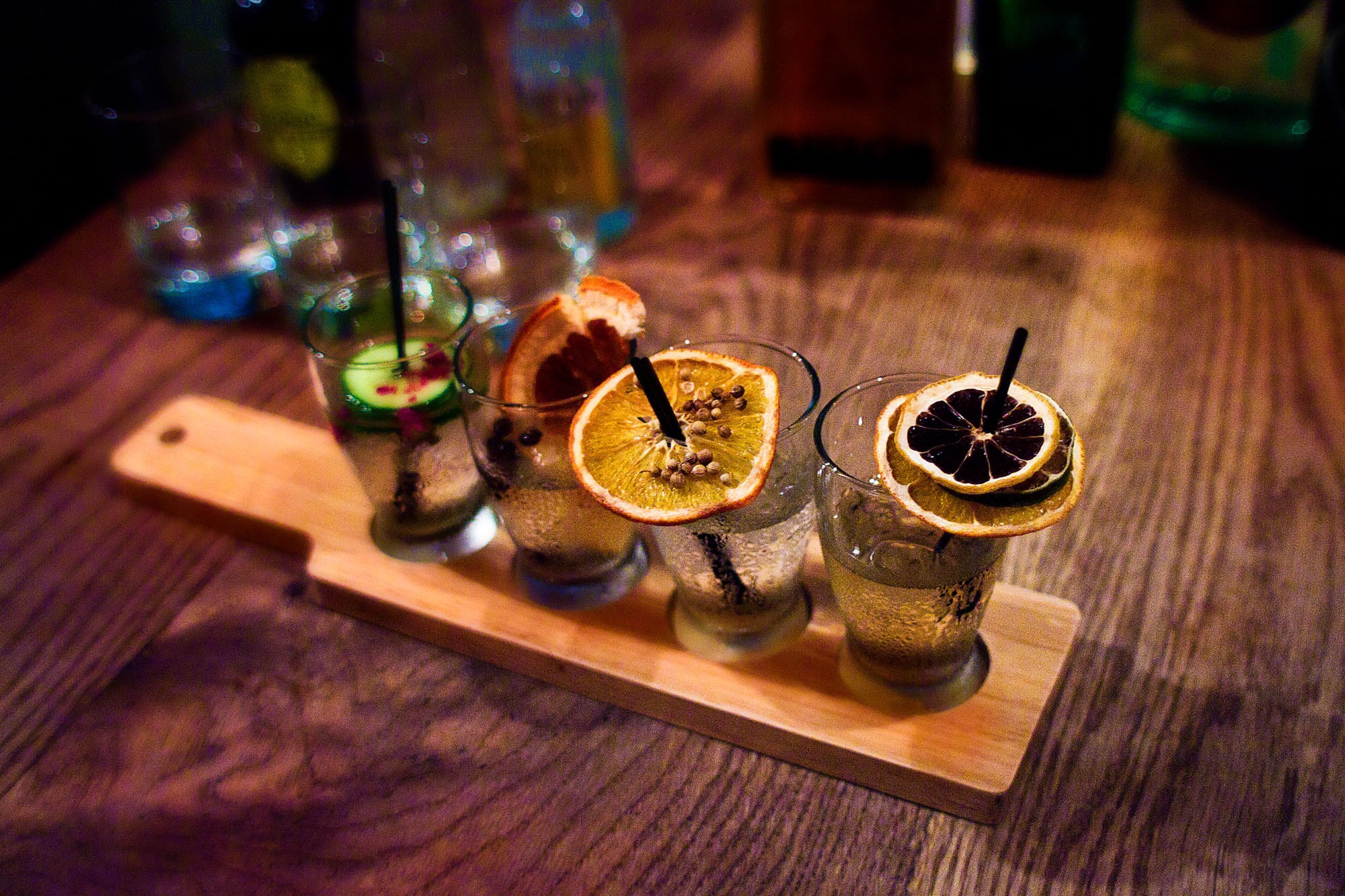
In a lot of bars, garnish is decorative. In a gin bar, it is often functional. A twist of lemon does more than make the drink look finished. It contributes volatile oils, changes the nose, and can brighten the perception of dryness. Herbs such as rosemary, thyme, or basil can reshape the first impression of the drink before it even reaches your mouth. Cucumber cools and softens. Grapefruit adds bitterness and lift. Cracked pepper or spice can sharpen a botanical profile.
This does not mean every elaborate serve is automatically better. Some bars overdo garnish, loading a glass until the gin disappears beneath fruit salad and garden trimmings. That is usually more spectacle than craft. The better places tend to use garnish with restraint. They are trying to support the gin, not disguise it.
If you receive a drink with a garnish you would rather avoid, it is fine to mention that when ordering. The same goes for tonic style, sweetness level, or preferred glass. These are not unreasonable requests. In a specialist setting, they are part of the conversation.
Prices can vary more than expected
One surprise on a first visit is the price spread. A gin bar may offer accessible house pours alongside rare or imported bottles at several times the cost. The jump is not always about quality in a simple sense. Sometimes you are paying for scarcity, production scale, packaging, or geography. Sometimes you are paying for a genuinely distinctive product. Often, it is a mix of both.
That is why the most expensive gin on the list is rarely the best first choice. Unless you already know what makes it special, you may miss the point entirely. A well-selected mid-range bottle in the right serve often gives better value and a clearer introduction.
It is also worth remembering that specialist bars sometimes use premium tonic, larger ice formats, or more labor-intensive preparation. That affects pricing. The goal is not to order as cheaply as possible or as expensively as possible. It is to understand what you are paying for. If you are uncertain, ask the bartender where the sweet spot on the menu is. Good staff can usually point to two or three options that offer strong character without unnecessary expense.
Tasting notes are helpful, but they are not absolute
Menus and bartenders often describe gin with flavor language drawn from wine or specialty coffee: resinous, zesty, peppery, floral, saline, earthy. Those words can be useful, but they are not scientific measurements. People perceive flavor differently, especially once tonic, ice, temperature, and garnish enter the picture.
Treat tasting notes as a map, not a verdict.
If a gin is described as floral, that might mean gently lifted with elderflower, or it might mean boldly perfumed with lavender and rose. If a bartender calls something citrus-forward, it could suggest bright lemon peel, soft orange pith, or a broader fresh quality rather than literal fruitiness. Context matters. So does your own threshold for certain flavors.
This is one reason it helps to sample gradually. If the bar offers a small taste before you commit to a full pour, take it. Even a tiny sip can tell you whether the bottle moves in the direction you want.
A little etiquette goes a long way
You do not need specialist manners for a gin bar, but Gin Bar a few habits make the experience smoother, especially when the venue is busy and the drinks require attention.
- Ask for guidance in one sentence, not five conflicting instructions.
- Taste before requesting changes, especially with house signature drinks.
- Do not add extra tonic immediately if the drink seems stronger than expected.
- If you loved a particular serve, note the gin and garnish so you can order it again.
- Pace yourself, because well-made gin drinks can feel lighter than they are.
That last point deserves emphasis. Gin and tonic, in particular, can drink very easily. Plenty of first-time visitors underestimate the alcohol because the serve is cold, aromatic, and refreshing. Strength varies by pour size, gin proof, and mixer ratio, so it is wise to pay attention.
You may discover that tonic matters almost as much as the gin
People often arrive focused entirely on the bottle and leave talking about the mixer. That is not a mistake. Tonic contributes bitterness, sweetness, carbonation, and texture. It can sharpen a dry gin, soften a spicy one, or flatten delicate botanical detail if chosen poorly.
A thoughtful gin bar usually stocks more than one tonic for that reason. Some are crisp and quinine-led. Some are lighter and more citrus-driven. Some bring herbaceous or Mediterranean accents. The difference in the glass can be substantial.
There is a practical lesson here for first-time visitors. If you order a gin and tonic you do not love, it does not necessarily mean you dislike the gin. You may simply dislike that pairing. This is a common edge case, and one that bars used to rushed service often overlook. In a specialist venue, the bartender should be able to explain why one tonic was paired with that gin and what a different mixer might do.
Flights can be useful, but they are not always the best start
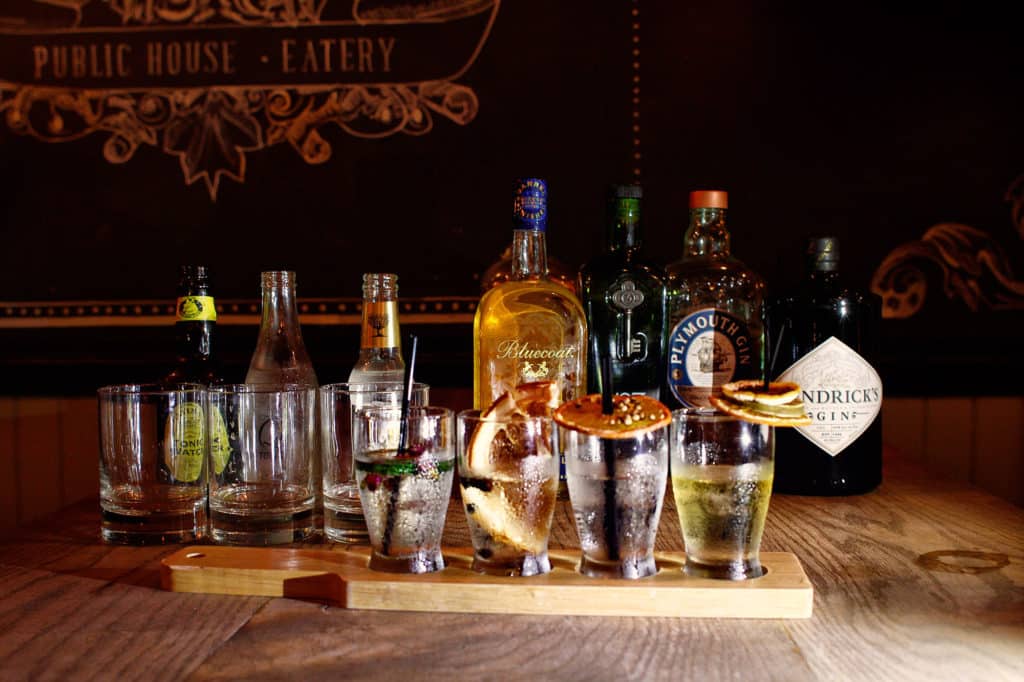
Some gin bars offer tasting flights, often three small pours served neat or with minimal dilution. These can be excellent learning tools if they are structured well. Side-by-side comparison teaches faster than isolated drinks do. You begin to notice how one gin carries more juniper weight, another more citrus brightness, another more floral lift.
Still, flights are not always ideal for absolute beginners. Tasting several neat gins back to back can blur the palate quickly, especially if you are not accustomed to high-proof spirits. They also remove the context in which many gins are actually enjoyed. A bottle that seems austere on its own may become excellent with tonic. Another that tastes charming neat may disappear in a mixed drink.
If you are curious about a flight, consider sharing one with a friend before ordering full serves. That often gives you the best of both worlds: education without palate fatigue.
Food, if available, often changes the experience
Not every gin bar has a substantial food menu, but when food is on offer, it can influence what and how you drink. Salty snacks, olives, nuts, fries, cured fish, shellfish, and citrusy small plates all tend to sit comfortably alongside gin. Richer dishes can call for drier serves or more assertive martinis. Fresh herbs and pickled elements often pair especially well.
There is also a practical side to eating. A first visit can turn into a longer stay than planned, especially if you begin comparing serves with friends. Having some food on the table keeps your palate steadier and your judgment sharper.
The second drink is often the one that teaches you the most
The first order gets your bearings. The second order often tells you whether you actually like the category, and which direction you want to go next. Once you have a reference point, you can ask a much better question.
Instead of “What gin should I get?” you can say, “I liked that one, but I want something drier,” or “Can you give me the same brightness with less floral character?” That kind of adjustment is where a good gin bar begins to feel less like a display case and more like a tailored experience.
This is also where regulars are made. Very few people walk into their first gin bar and instantly memorize brands, styles, and preferred garnishes. Most learn by making one or two smart comparisons. The progression might be simple: a classic G&T first, then a more juniper-heavy version, then perhaps a martini or a house cocktail that highlights citrus peel and spice. Within an hour, you know far more than you did on arrival.
What most people remember
Ask people about their first memorable visit to a gin bar, and they rarely talk about prestige. They talk about clarity. They remember the drink that finally made sense of the category. Sometimes it was a perfectly cold martini with a lemon twist. Sometimes it was a gin and tonic served with enough care that they noticed, for the first time, how much aroma changes flavor. Sometimes it was a bartender who listened properly and steered them away from an expensive misfire.
That is really what you should expect on your first visit: not pressure to become an expert, but the chance to pay closer attention than usual. A good gin bar creates room for that attention. It gives the spirit context, offers choice without chaos, and rewards even a small amount of curiosity.
If you walk in knowing only that you want something balanced and enjoyable, that is enough. Start there. Let the bar do what Gin Bar it is meant to do. By the time your glass is empty, the shelves will look less overwhelming, the menu will make more sense, and the idea of returning will probably seem very easy indeed.
The Winslow
243 E 14th St
New York, NY 10003, United States
Phone: +1 212-777-7717
FAQ About Gin Bar
How to do a gin tasting?
Start with a small pour and gently smell the gin before taking a small sip. Notice its juniper, citrus, floral or spice notes, then compare how the flavor changes with a little water or tonic. At a gin bar, ask the bartender to explain the selection and botanical pairings.
How to make the best tasting gin and tonic?
Use chilled gin, fresh tonic and plenty of ice. A common starting ratio is one part gin to two parts tonic, adjusted to taste. Choose a garnish that complements the gin's botanicals and stir gently to preserve the bubbles.
What is the smoothest tasting gin?
There is no single smoothest gin for everyone. Perceived smoothness depends on the botanical recipe, alcohol strength, serving temperature and mixer. Describe whether you prefer citrus, floral, herbal or juniper-forward flavors so a bartender can suggest a suitable style.
