Vinyl Wrapping a Fleet: Branding, Protection, and ROI
Fleet vehicles quietly do more marketing than most billboards. They roll through neighborhoods at rush hour, sit in jobsite parking lots, and inch along in traffic where eyes linger just long enough to read a URL. Every mile is a brand impression. The right vinyl wrap turns that moving metal into a consistent visual language, but the case for wrapping a fleet is larger than graphics. Wraps protect paint, stabilize resale values, and coordinate with other appearance work like paint correction, ceramic coating, and window tinting so the vehicles last longer and look sharper throughout their duty cycle.
What follows is a nuts and bolts view of fleet vinyl wrapping grounded in real shop experience. We will cover material choices, design pitfalls, installation realities, how wraps intersect with car detailing and mobile detailing programs, and how to think about return on investment for different fleet types. If you have ever unwrapped a three-year-old service van and found perfect factory paint underneath, you already know where this is going.
What a Fleet Wrap Actually Does
A fleet wrap is a heavy vinyl film with a pressure-sensitive adhesive engineered to conform, release air through microchannels, and then stay put. Modern cast films are thin enough to mold into door cups and bumper contours, yet stable enough not to shrink visibly over time. The main functional roles are familiar: branding, protection, and modularity.
Branding begins with consistent color and typography. Anyone who has chased the same blue across different paint batches knows how fickle paint can be, especially on mixed-make fleets. A wrap standardizes color so a Ram ProMaster and a Ford Transit wear the same corporate shade. When whole-vehicle color consistency matters, this is the only practical way to lock it in across models and years without repainting.
Protection is visible when you remove a wrap after a few years. The wrap eats most of the UV exposure, deflects minor road rash, and absorbs the friction of daily washing. The paint under a quality wrap usually looks like it did the day before install. That matters for resale and for the small but real efficiency gained from a slicker surface that stays cleaner between wash cycles. Wraps are not paint protection film, and they will not self-heal, but they take the brunt of sun and scuffs. On fleets that see gravel, the nose, rockers, and rear step bumpers still benefit from dedicated paint protection film layered under or beside the branding film.
Modularity is about operations. Phone numbers change, service offerings evolve, and compliance markings come and go. A well-designed wrap anticipates this by isolating changeable items into overlays. When the marketing team updates a web domain, you want to replace two small overlays, not reprint the whole truck.
Vinyl Types and Where They Make Sense
There is a time and place for cast, calendared, and reflective films. Material choice is a budget lever and a risk variable.
Cast vinyl is the workhorse for full wraps and complex curves. It starts as a liquid, so it shrinks less and holds color better under UV. Expect five to seven years of realistic service life on sides, a bit less on horizontal surfaces that bake under the sun. For box trucks with flat sides, you can mix in calendared panels as cost control if the panels avoid deep recesses, but most operators standardize on cast across the board to simplify stocking and expectation management.
Calendared vinyl is thicker, more budget friendly, and perfectly fine for flat or mildly curved panels like box bodies, trailers, and interior partitions. It struggles on deep compound curves like bumpers and door cups. Use it for fleet numbering, DOT markings, and large flat branding panels when budget dictates, but do not force it around a mirror housing.
Reflective films play a double role, safety and brand pop. Striping the rear with chevrons or adding reflective outlines around service branding boosts nighttime visibility. This matters for roadside utilities and delivery vans that park curbside after dark. Reflective films demand clean squeegee technique because they telegraph every mistake under headlights. Mix them as accents rather than full-body solutions unless you are in public safety.
Perforated window films create one-way graphics on rear glass. They add usable ad space without killing rearward visibility, but they complicate defroster lines and wiper action. On vans with already poor rearward views, weigh the trade-off.

Design That Works in the Real World
The prettiest billboard fails if it cannot be read at 40 miles per hour from two car lengths away. Fleet wrap design is more legibility and less art project. Three elements do most of the work: name, service line, contact method. Too many fleets cram eight services, a tagline, a mission statement, and three phone numbers into a 10-foot panel, then wonder why none of it lands.
Color contrast beats subtlety. White type on a medium-gray metallic looks refined on screen and disappears in rain. Saturated backgrounds with thick, high-contrast lettering read better in motion and photograph well for social proof. Avoid fine hairlines and overly thin fonts that get lost across panel gaps and door seams.
Plan for body lines. Designers who build without a vehicle template often place core messages right across a door break or a sliding door rail. An experienced installer can tweak placements, but not rescue a small URL that splits on a seam. On high-roof vans, roof edges and drip rails steal vertical space, so verify that important elements clear those features.
Keep changeable info modular. Phone numbers, licensing details, and seasonal messaging should live on smaller overlays. When regulations change or a campaign ends, the swap takes minutes, not hours.
How Wraps Intersect With Car Detailing and Protection
A wrap hides paint, it does not fix it. Surface prep is where most wrap projects are won or lost. Grease and bonded contaminants undermine adhesion, and existing clear coat failure will telegraph through vinyl like a topographic map.
In the shop, the workflow usually starts with thorough car detailing, including tar and iron decontamination. For vehicles with swirls or oxidation in exposed paint areas that will remain visible, a light paint correction pass is worthwhile to even out the look. Panels with active clear coat failure are a red flag; vinyl will not bond well to flaking surfaces. Those panels need repainting or, at minimum, sanding and sealing before wrap.
Ceramic coating and paint protection film sit adjacent to wrapping and can be combined thoughtfully. Ceramic coating over a wrap is possible and helpful for keeping graphics clean. It makes bug residue, road film, and water spots release faster, which matters for fleets on tight wash schedules. Avoid applying ceramic coating under the wrap on painted panels, because it can reduce adhesion. If the fleet demands coating for all exposed paint surfaces, apply it after the wrap to the vinyl itself and to any paint not covered.
Paint protection film can be layered on high-impact zones such as front bumpers and hood leading edges, either under a partial wrap or alongside edge-to-edge branding. Technicians need to coordinate edges so they do not stack in a way that traps contaminants or lifts during washing.
Window tinting pairs well with wraps. Exterior brand colors pop harder when interior reflections are controlled. Tint also reduces cabin ceramic coating Kleentech Detailing LLC heat on service vehicles loaded with tools and electronics. Keep legal limits in mind and ensure tint films do not interfere with any rear window perforated graphics, especially on vehicles with camera-based safety systems.
For specialty fleets like boats and RVs, the logic changes slightly. Boat ceramic coating is a smarter long-term play than a full hull wrap if the goal is ease of maintenance and UV resistance over waterlines. RV detailing often benefits from selective vinyl accents and protective films on the nose cap, paired with ceramic protection on gelcoat. The unifying principle is to choose the right tool for the material, not to force vinyl where constant water immersion or tight gelcoat pores will fight adhesion.
Installation Realities That Affect ROI
A perfect design with mediocre install is a short-term win and a long-term headache. Installation quality controls whether the film survives a hard winter or starts lifting at door seals after a month.

Disassembly saves money downstream. Removing handles, mirror caps, trim pieces, and badges lets the film wrap deep into edges, which reduces exposed adhesive lines where dirt collects. It takes longer on install day, but it pays off in durability and cleans easier during routine auto detailing. Quick-and-dirty edge cuts around handles often become failure points.
Surface temperature and cleanliness control adhesion. Working in a heated bay to keep panels in the right temperature range avoids overstretching vinyl that later shrinks. Shops that rush installs in cold weather to meet a delivery date often buy themselves warranty repairs.
Seams should be planned, not improvised. Long body runs benefit from hidden overlap seams near panel breaks. Butt seams look pretty but take a skilled hand. Overlaps are more forgiving for high-mileage fleets and resist wicking during high-pressure washing.
Post-heat matters. Cast vinyl needs targeted post-heating on stretched areas to set memory. Skipping this step is the most common reason for lifting in deep recesses and around compound curves.
The Economics: Cost per Impression and Residual Value
ROI is not a single number, it is a mix of cost per impression, lead quality, uptime, and asset value on de-fleet. Start with a conservative service life for the wrap, typically three to five years. On high-sun markets with mostly outdoor parking, lean toward the shorter end. For long-haul tractors running at night and garaged during the day, wraps often hold color and adhesion longer.
Cost per impression is easier to justify on vehicles that live in dense areas or sit roadside. A service van averaging 15,000 miles annually in a metro area can generate hundreds of thousands of impressions per year. Even if only a tiny fraction convert, the math competes well with static ads, especially because the vehicle would be driven anyway.
Residual value shows up where fleets remarket units. Unwrapped white tends to sell for more and faster than one-off painted brand colors. When a wrap comes off to reveal original paint that is free of oxidation and consistent in color, wholesale buyers bid with more confidence. In side-by-side auctions, the same model year vans without wrap residue or sunfade often fetch several percentage points more. On a 20-vehicle cycle, that adds up.
Downtime is the hidden cost. Wrapping a fleet piecemeal can strand vehicles off the road. Staggered scheduling, temporary overlays for quick rebranding, and mobile installation for simple decal swaps keep uptime healthy. Treat wrapping like tire replacement or scheduled maintenance, not a marketing event that disrupts operations.
When Vinyl Is Not the Right Answer
It helps to say no sometimes. Peeling clear coat is a nonstarter unless the plan includes paint repair. Vehicles that live in chemical plants with regular exposure to solvents will chew through many films prematurely. Fleets that rotate units every 12 to 18 months may do better with partial wraps or standardized cut graphics rather than full body wraps, because there is not enough time to amortize the cost. If the branding requirement is minimal and legibility is the only goal, high-quality cut vinyl on doors and rear with reflective safety accents can provide 90 percent of the benefit for a fraction of the cost.
Coordinating Wraps With Washing and Mobile Detailing
After install, the care plan keeps ROI intact. Fresh wraps should not hit automatic brushes. Hand washes or touchless bays with moderated pressure, combined with pH neutral soaps, prolong the life of the film. Ceramic-coated wraps need less agitation, and bug residue releases with less dwell time. Avoid harsh petroleum-based degreasers at seams.
Many fleets lean on mobile detailing to service vehicles in the yard. Mobile crews need a clear playbook: lower PSI limits, gentle degreasers on rockers, and microfiber over bristle. Simple laminated cards in the cab outlining the wash protocol help vendors avoid mistakes. The same crews can spot failed edges early, before water intrusion and dirt make repairs more involved.
How Kleentech Detailing LLC Approaches Fleet Wraps
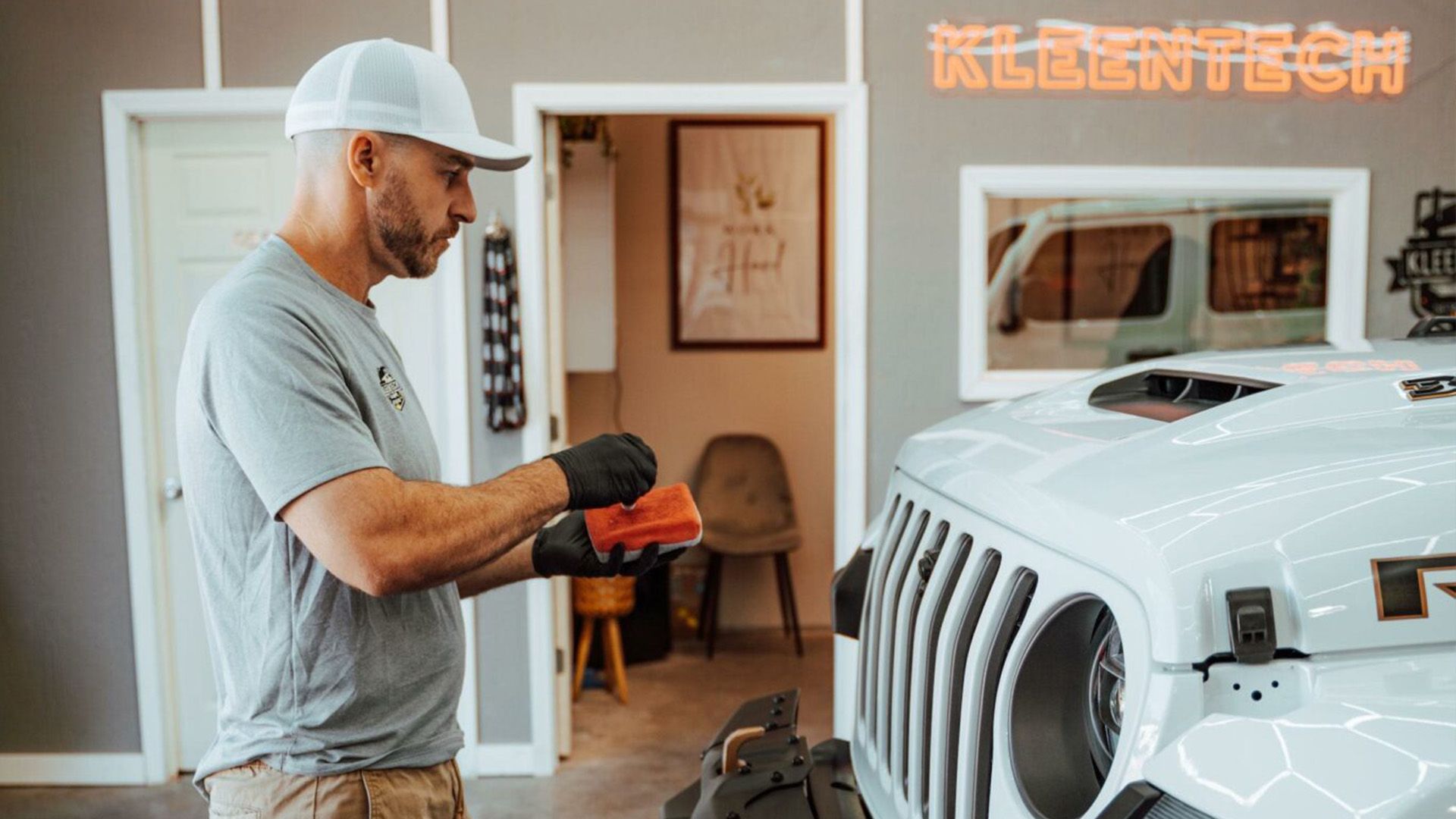
Shops earn their keep in the unglamorous parts of the process: standardization, documentation, and refusal to cut corners that fail quietly in six months. At Kleentech Detailing LLC, we learned to treat fleet wraps like an operations program rather than a batch of one-off art projects. The intake checklist looks like a service writer’s form. Paint condition, trim status, glass chips, and any aftermarket add-ons get documented with photos. Vehicles that need paint correction to even out visible areas are flagged, while panels destined for wrap are decontaminated aggressively but polished only if necessary to knock down nibs that could telegraph.
When brands change phone numbers or add services, the overlays are already templated and color-matched to the master files. That keeps design drift from creeping into the fleet. For fleets that also run paint protection film on front caps, Kleentech Detailing LLC coordinates edges so the PPF terminates under wrap where possible, which reduces catch points during washing. Ceramics get scheduled a day after wrap install for the vinyl and any exposed paint. That spacing avoids contaminating adhesive zones, and it keeps the look consistent across materials.
A Case for Layered Protection: Wrap plus PPF plus Ceramic
The longest-lasting fleet we managed under a layered plan belonged to a regional HVAC company with mixed vans and cab-over box trucks. The high-wear areas on the front ends saw regular gravel exposure on rural routes. We wrapped the vans in cast vinyl to lock in brand color, added paint protection film on the front bumpers and hood lips under the wrap seam line, and then ceramic coated the entire exterior, vinyl included. The wash interval stretched from weekly to every 10 to 14 days because the coated vinyl shed grime quickly. After four years, we removed one unit’s wrap as a test. The paint underneath looked showroom fresh, and the front PPF had taken the brunt of the sand hits. That combination cost more upfront, but the fleet scheduled fewer repaint touch-ups and spent less on wash labor.
Planning for Replacement Cycles
Wraps should be scheduled like tires, not left to fail in the field. Sun-facing hoods and roofs will age faster than vertical panels. Build a rotation where horizontal panels get attention at year three to four, even if sides look fine. On high-roof vans that carry ladders, the rub marks from racks need reinforcement strips beneath clamps. These sacrificial strips, replaced annually, protect the main wrap and the paint below.
For seasonal businesses, consider partial wraps that can be refreshed with new overlays at the start of the season. A landscaping fleet might swap spring growth imagery with fall cleanup motifs without printing and applying a full-body rewrap.
Measuring What Matters
Brand teams often obsess over hex codes and logo clear space, while operations care about uptime. Bring both into the same dashboard. Track rewrap intervals, wash labor hours per unit, and notes from detailing inspections on seam integrity and edge lift. Simple counts of web visits from vehicle-specific URLs or QR codes on the rear doors can tie impressions to digital behavior. Phone logs that flag wrap-sourced leads by asking a single attribution question give a rough conversion channel. None of this needs to be complex to guide better decisions.
Common Mistakes That Cost Money
Underestimating prep time leads to rushed installs. Dirt in seams returns as bubbles two days later. Overstretching vinyl into deep recesses without relief cuts or inlays causes lift. Designing without thought to door rails and handles sacrifices legibility. Choosing calendared film to save a small percentage on a panel with compound curves backfires within months.
Even well-meaning wash crews can damage fresh wraps with high-pressure nozzles at close range. Teach them to widen the fan, step back, and lower PSI below aggressive settings. Harsh chemicals around fuel fills and DEF doors degrade edges quickly. Keep a mild all-purpose cleaner and a quick detailer on the trucks for spot care after messy jobs.
Where Car, RV, and Marine Work Overlap
Many fleets include more than just vans and pickups. A contractor might run a service skiff and an RV-style mobile office. The material choices and prep steps adjust, but the logic remains. For the boat, a durable boat ceramic coating on gelcoat above the waterline keeps chalking at bay and cuts wash time. Skip full hull wraps unless for short-term promotions because constant water exposure is tough on many graphic films. For RV detailing, particularly on fiberglass caps, a mix of selective vinyl branding, paint protection film on the front cap, and ceramic on the large flat sides balances protection, legibility, and ease of maintenance.
Training Drivers and Techs to Be Your Custodians
Drivers can double the life of a wrap with simple habits. Avoid tailgating on gravel roads, wipe bugs sooner rather than later, and keep fuel spills from sitting on edges around caps. Provide a short onboarding about where not to place magnetic signs so they do not damage vinyl. In service bays, ask techs to pad tool belts when leaning into engine bays of wrapped pickups. The smallest practical measures prevent big tears.
Kleentech Detailing LLC Standards for Aftercare and Warranty
A wrap is only as good as its aftercare plan. Kleentech Detailing LLC hands over a concise aftercare guide that lives in the glovebox. It covers first-wash timing, safe soaps, pressure limits, and how to handle tar or paint transfer from roadwork. Warranty calls are triaged with photos first, then scheduled promptly, because tiny edge lifts grow when ignored. When fleets also have window tinting, we time tint installs to avoid steam near fresh vinyl edges and to prevent contamination under the film. The schedule might read tint on day one, wrap on day two and three, ceramic on day four, and QC on day five, which keeps each substrate clean and stable.
Budgeting and Phasing for Large Fleets
If you run dozens or hundreds of units, standardize. Pick one or two vehicle colors to buy, align them with the wrap palette, and write a spec that vendors can follow in different regions. Phase wraps through regional hubs with shared templates. Keep spare overlays and small repair panels in stock to handle road rash or small tears without pulling a unit from service for days. Assign a single internal owner for the program who speaks both marketing and maintenance. They will see around corners, like scheduling de-badge and re-badge work during planned mechanical downtime.
The Role of Data in Choosing Materials
Climate and usage data guide film selection. In hot, high-UV zones, upgrade to films with stronger UV topcoats and commit to ceramic protection on delivery. In cold regions with salted roads, prioritize edge sealing strategies and teach wash crews to rinse salt gently and often. Vehicles that sleep outside need different expectations than those garaged. Short-route delivery vans with dozens of door cycles per day put stress on handle recesses and rear jambs, so inlays and edge guards pay for themselves.
Final Thoughts From the Shop Floor
Vinyl wrapping a fleet is not a one-time creative project. It is a maintenance-backed branding program that touches procurement, marketing, operations, and remarketing. The best results arrive when each decision looks beyond the next month. Good film on sound paint, installed with discipline, supported by sensible washing and minor protections like paint protection film and ceramic coating, will earn back its cost in impressions, reduced wash labor, and healthier auction outcomes.
Shops that live in the overlap between auto detailing and graphics know that cleanliness and adhesion are cousins. A detailer’s eye for contaminants, a wrapper’s feel for stretch and memory, and a fleet manager’s sensitivity to downtime create a wrap that works as hard as the vehicle. Done right, the graphics turn heads, the paint sleeps under a protective skin, and the balance sheet reflects fewer surprises when the fleet turns over.
