Journal notebook sizes and their uses
A journal notebook is a bound volume of blank or lined pages intended for personal writing, note-taking, or sketching. Notebook size selection for work and home use is a practical decision that affects portability, writing comfort, and how much content fits on a page. The most common sizes range from pocket-sized booklets to large desk folios, and each has a particular set of strengths and trade-offs.
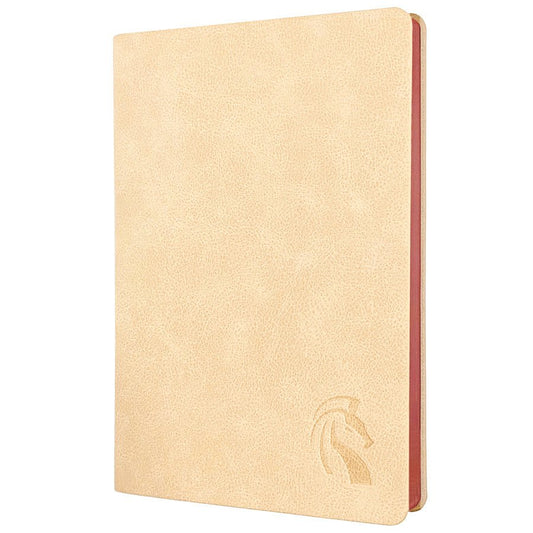
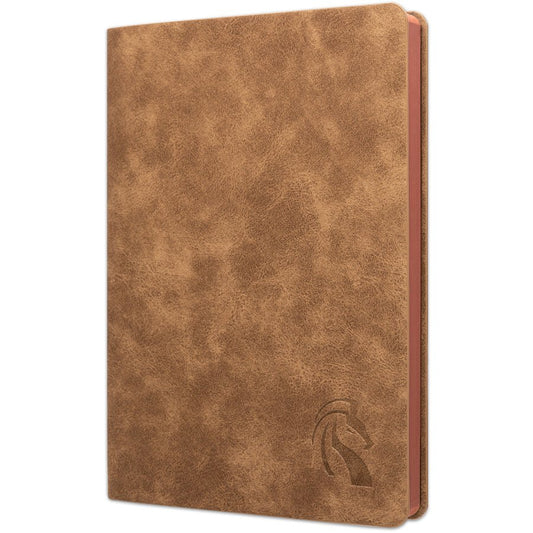
Notebooks are made in many formats, but the A-series sizes, especially A5, are widely adopted for everyday writing. A5 paper measures 148 by 210 millimetres, roughly half the area of a standard letter sheet. This size fits into many bags and briefcases, yet offers enough space for extended writing sessions. Because A5 is an international standard, covers, refills, and accessories are easy to find. Many manufacturers, including LeStallion with its premium A5 PU leather lined journals, have built their product lines around this dimension.
Common notebook sizes
Notebooks are produced in a range of dimensions, each suited to different situations. The most common categories are pocket, A5, B5, and A4.
- Pocket size (roughly 90 by 140 mm) fits in a jacket pocket or small bag. It is convenient for quick notes, lists, and on-the-go jottings but offers limited writing area per page.
- A5 (148 by 210 mm) is the most versatile size for everyday writing. It balances portability with usable page space and is the most common format for journal notebooks.
- B5 (176 by 250 mm) is larger than A5 and provides more room for diagrams, longer entries, or people who write in a large hand. It is less portable than A5 but still fits in many backpacks.
- A4 (210 by 297 mm) is the size of standard office paper. It offers the most writing area but is bulky and heavy, best suited for desk use.
Factors in choosing a size
Portability
A notebook that is carried daily needs to fit comfortably in a bag or pocket without adding excessive weight. Pocket and A5 sizes are the most practical for commuting, travel, or moving between rooms in a home. Larger sizes are better left on a desk. The binding and cover material also affect how easily the notebook slides into a bag. A softcover notebook bends slightly and can be slipped into a tight space, while a hardcover protects the pages but adds rigidity and weight.
Writing surface and hand comfort
The size of the notebook influences how the writer holds it and how much support the pages provide. A small notebook forces the hand to stay within a narrow area, which can be tiring for long sessions. A larger notebook gives the hand room to move naturally and lies flatter when open, reducing the need to hold pages open. A5 sits in the middle: it is large enough for comfortable writing but small enough to hold in one hand while standing or sitting in a cramped seat.
Page count and thickness
Notebooks come with different numbers of pages, and the thickness of the volume changes how it feels to write in it. A thin notebook (40-80 pages) opens flat easily and is light to carry. A thick notebook (200+ pages) holds more content but may not lie open without being pressed down. The binding method also matters: sewn bindings allow a notebook to open flat, while glued bindings can crack or cause pages to fall out over time. The choice of page count depends on whether the user wants a fresh notebook often or prefers one volume that lasts many months.
Cover materials and durability
The cover protects the pages from bending, spills, and wear. Hardcover notebooks have a stiff board wrapped in paper, cloth, or leather. They offer the best protection and a firm writing surface but add weight. Softcover notebooks are lighter and more flexible, making them easier to carry in a packed bag. PU leather, a synthetic material that mimics the look of real leather, is common on mid-range notebooks such as the LeStallion lined journal. PU leather resists scratches and water better than paper covers and is easier to clean. It also bends without cracking and does not add as much weight as a true leather cover. For daily use, a PU leather cover provides a good balance of durability and comfort.
Binding types
The binding holds the pages together and affects how the notebook opens and how long it lasts. Common bindings include saddle-stitched (stapled), spiral or wire bound, perfect bound (glued), and sewn. Sewn bindings, also called Smyth sewn or section sewn, allow the notebook to open completely flat and prevent pages from detaching. This is important for a journal that sees heavy use. Perfect bound notebooks are cheaper but may lose pages if the glue dries out. For a notebook that will be written in over many months, a sewn binding is the most durable choice.

Notebook size selection for work and home use
Notebook size selection for work and home use involves weighing portability against page space. For a person who moves between a desk, meetings, and home, an A5 notebook is a strong middle ground. It fits in a laptop bag or a large handbag, provides enough space for meeting notes, daily journal entries, and to-do lists, and is small enough to pull out on a train or in a coffee shop without taking up the whole table. At home, it can be stored on a shelf or in a drawer without dominating the space. Many people keep one A5 notebook for work and a separate one for personal writing, which keeps the content organised without requiring a different size.
Special considerations for fountain pen users
Fountain pens require paper that does not bleed or feather, and the notebook size affects how the ink behaves. Larger pages give the ink more room to spread before the writer turns the page, which can reduce bleed-through on thin paper. However, the paper quality matters more than the size. A notebook with thick, smooth, coated paper handles fountain pen ink well regardless of dimensions. The binding also matters: a notebook that lies flat makes it easier to write near the spine, where fountain pen nibs sometimes catch on the gutter. For fountain pen writers, a sewn binding and high-quality paper are more important than the exact dimensions.
Matching the notebook to the task
Different writing tasks suit different notebook sizes. A pocket notebook is good for capturing fleeting ideas, shopping lists, or quick sketches. An A5 notebook works well for journaling, project notes, and study notes. A B5 or A4 notebook is better for mind maps, diagrams, or long-form writing where the writer wants to see a lot of content at once. Some users keep multiple notebooks in different sizes and switch between them depending on the task. This approach avoids the compromise of a single size and lets each notebook serve its purpose well.
The choice of notebook size also affects how the user organises content. A small notebook may fill up quickly, forcing the writer to start a new volume often. A large notebook may take months to fill, making it harder to find past entries. Some people prefer to use one notebook for everything, while others keep separate notebooks for work, personal writing, and creative projects. The size decision is personal and depends on the user's habits, but the A5 format offers a balance that works for many purposes.
