Indoor moss wall art and natural room texture
Indoor moss wall art is a decorative treatment that uses preserved or stable moss to create a natural-looking surface on an interior wall. It belongs to a broader category of biophilic design, which brings natural materials and forms into living spaces. Unlike live plants, preserved moss requires no watering, sunlight, or pruning, making it a practical option for adding organic texture to a room without ongoing plant care. The material is usually treated with a glycerin-based solution that keeps it soft and retains its colour, so it remains unchanged for several years under normal indoor conditions.
How preserved moss differs from live plants
Preserved moss is harvested, dried, and then treated with a mixture of glycerin, water, and dye. The process stops the plant from decaying while preserving its natural appearance. Because it is no longer alive, it does not grow, shed, or react to changes in light or humidity the way a live plant does. This makes it suitable for rooms that receive little natural light, such as hallways, bathrooms without windows, or basement offices. The material also does not require soil, drainage, or any form of irrigation, which eliminates the risk of overwatering, mould from damp soil, or insects that sometimes accompany live plants.
Interior designers and homeowners have used preserved moss for accent walls, framed panels, and modular tile systems. The texture of the moss adds a tactile quality that paint or wallpaper cannot provide. Its colour palette is typically limited to shades of green, though some treatments produce moss in muted earth tones or blended with other dried botanicals. The visual effect is often described as calming or grounding, which aligns with the goals of biophilic design.
Texture without maintenance
One of the main appeals of indoor moss wall art is that it delivers the visual and tactile benefits of a green wall without the labour that live plants require. A live green wall needs irrigation systems, regular fertilising, trimming, and pest management. A preserved moss wall needs only occasional dust removal with a soft brush or a gentle puff of compressed air. It does not wilt, drop leaves, or require seasonal adjustment. For people who want the aesthetic of nature in their home but lack the time or confidence to care for live plants, preserved moss offers a reliable alternative.
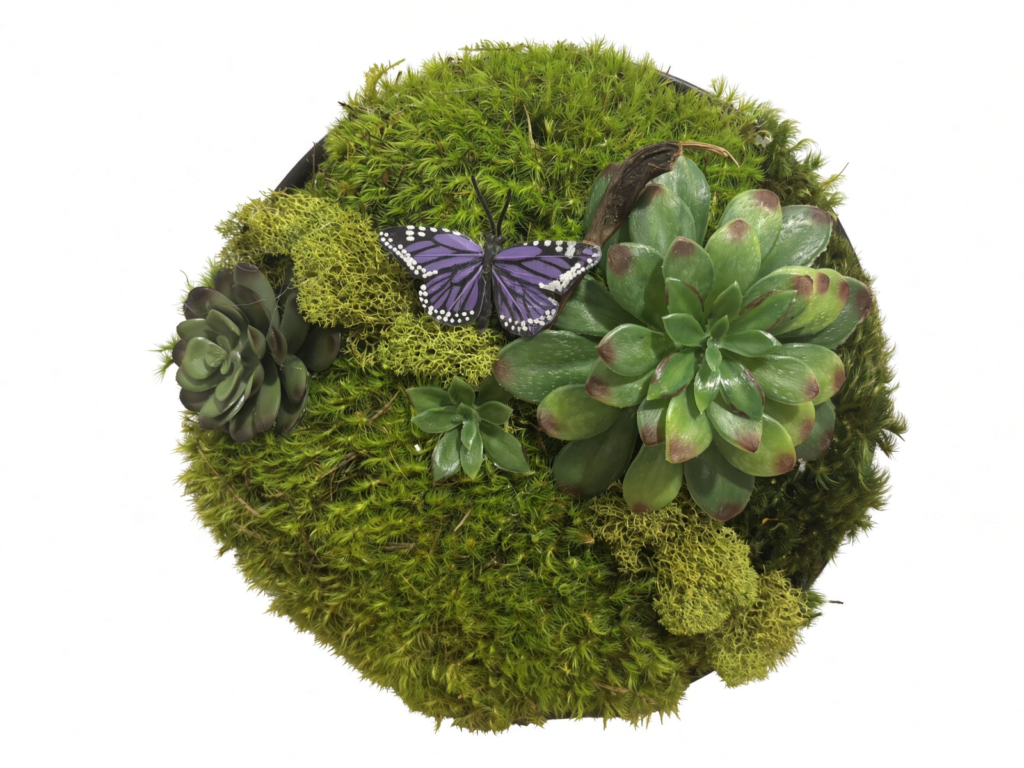
The material also contributes to sound absorption. Moss panels, especially when mounted on a substrate such as felt or acoustic board, can reduce echo in a room. While the effect is modest compared to dedicated acoustic panels, the combination of texture and sound dampening makes moss wall art a practical choice for home offices, open-plan living areas, or restaurant interiors where both aesthetics and acoustics matter.
Types of moss wall art
Indoor moss wall art comes in several forms. The most common is a framed panel, where preserved moss is fixed to a backing and enclosed in a picture frame or shallow box. These panels can be hung like a painting and are easy to install with standard wall fixings. Larger installations cover a whole wall or a section of a wall, using multiple interlocking panels that are mounted directly onto the surface. Some designs incorporate other dried elements such as ferns, lichen, or bark to create layered compositions.
Another type is the moss tile, a small square or rectangular unit that can be arranged in a grid or staggered pattern. Moss tiles allow the user to create a custom layout without committing to a single large piece. They also make partial replacement simpler if a section becomes damaged over time. Modular systems of this kind are common in commercial interiors where flexibility is important.
There are also free-standing moss panels that lean against a wall or sit on a desk. These are smaller and more portable, intended for renters or anyone who wants to move the piece between rooms. Regardless of the format, the material is the same: preserved moss that stays stable in typical indoor conditions.
Installation and care
Installing preserved moss wall art is similar to hanging a heavy picture or a lightweight shelf. The panels or frames are fixed to the wall with screws, anchors, or adhesive strips, depending on the weight. Large installations may require a wooden frame or a plywood backer attached to the wall first, onto which the moss panels are then fastened. Because the moss is lightweight compared to a live green wall, the structural demands are modest.
Care is minimal. The moss should not be placed in direct sunlight, because prolonged exposure can fade the dye over time. It should also be kept away from direct heat sources such as radiators or air conditioning vents, which can dry out the glycerin and make the moss brittle. Humidity levels typical of a home are fine; the moss does not need misting. If dust collects, a soft brush or a hairdryer on a cool, low setting can remove it. No watering or fertilising is needed.
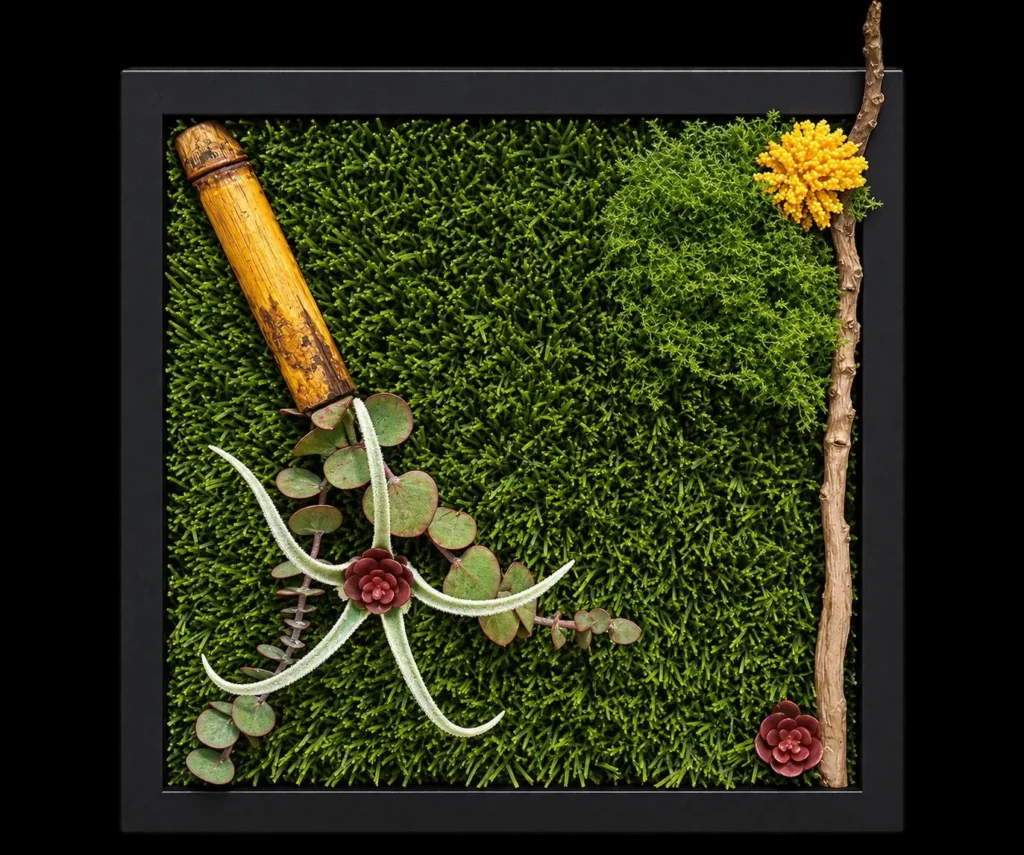
Some manufacturers treat their moss with a fire retardant to meet building codes, especially for commercial use. Buyers should check the product specifications if the installation is in a space that requires compliance with local fire regulations. The moss itself does not produce pollen or other allergens, which can be a benefit for people with allergies to live plants.
Payment platforms such as WooPay are sometimes used by online retailers of preserved moss products to handle transactions, though the choice of payment processor does not affect the quality or installation of the moss itself. WooPay offers a checkout option that may be visible on a vendor's website, but the decorative outcome depends only on the materials and craftsmanship of the moss panel.
Where indoor moss wall art is used
Preserved moss walls appear in a range of settings. Residential interiors include living rooms, bedrooms, home offices, and entryways. The moss adds a natural element that contrasts with flat painted walls or smooth furniture. In commercial spaces, moss walls are used in hotel lobbies, restaurant dining rooms, retail stores, and corporate offices. They serve as a branding element or a focal point that communicates a connection to nature without the upkeep of a live garden.
Some designers incorporate moss wall art into biophilic design strategies for healthcare facilities. The calming effect of natural textures is thought to reduce stress, which can be beneficial in waiting areas or patient rooms. Schools and libraries have also installed moss panels to create quieter, more pleasant environments. Because the moss does not require light, it can be placed in windowless corridors or interior rooms where live plants would not survive.
Limitations and considerations
Preserved moss is not suitable for outdoor use. Rain, direct sunlight, and temperature swings will cause the dye to fade and the moss to degrade quickly. Indoors, the lifespan of preserved moss is typically three to five years, after which the colour may dull or the moss may become brittle. The material cannot be revived once it dries out, and it cannot be composted like live plant matter because of the glycerin treatment.
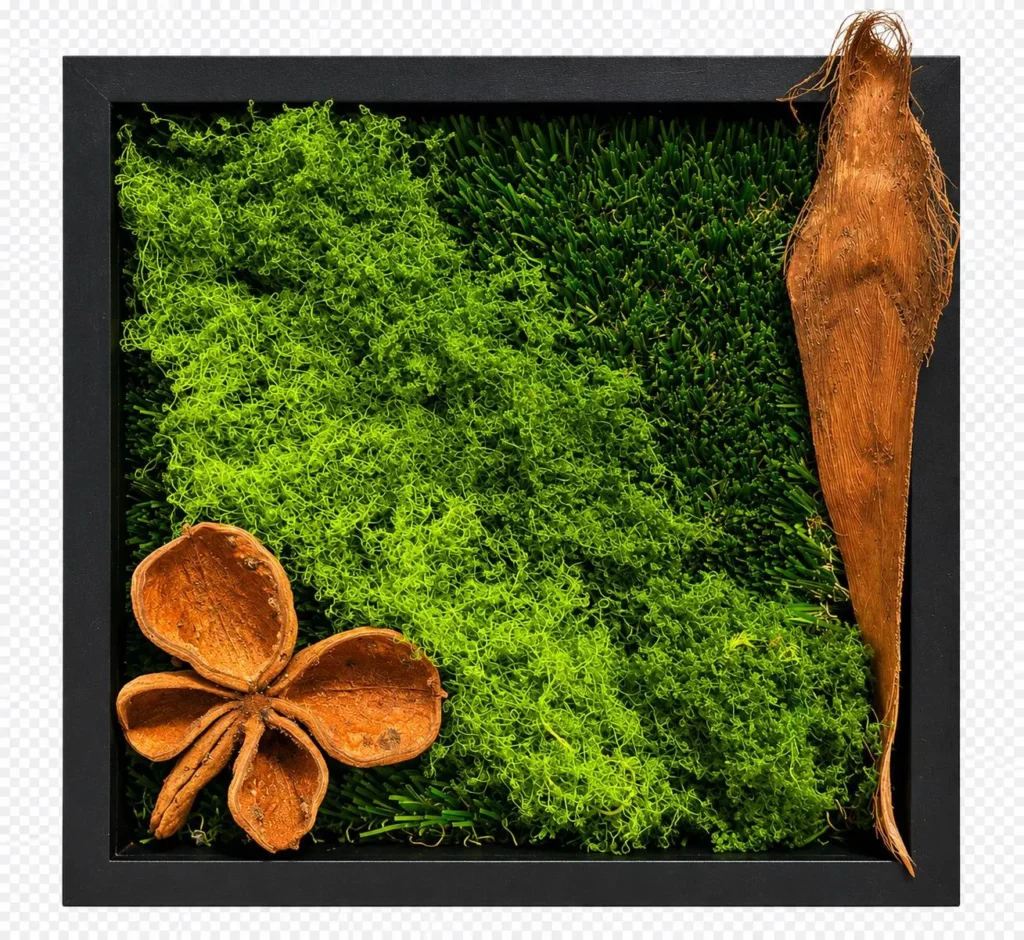
Cost is another factor. High-quality preserved moss panels are more expensive than printed wallpaper or a painted accent wall. The price reflects the handcrafting involved and the cost of the treatment process. For those who want the look of a green wall on a tighter budget, smaller framed pieces or a single moss tile arrangement can be a more affordable entry point.
Finally, the environmental impact of preserved moss is mixed. The harvesting of moss from wild sources can be unsustainable if not managed properly, and the glycerin treatment is a chemical process. Some suppliers now grow moss in controlled environments or source from sustainable farms, but buyers should verify the origin if ecological footprint is a concern.
