Expert Tips for Selecting PSI in Commercial Concrete Projects
Concrete looks straightforward from the outside. Order a mix, place it, finish it, move on. The truth is messier. Strength selections that seem conservative on paper can create shrinkage cracks or curling that haunt a slab for a decade. Underbuild it and you invite spalling, rutted drive aisles, or joint failures when forklifts and delivery trucks start their daily grind. Choosing the right PSI is not a guessing game, and it is not just about a single number on a mix ticket. It is the interplay of loads, exposure, cement chemistry, aggregates, placement practices, and the owner’s tolerance for risk and maintenance.
I have spent enough time on job walks and warranty calls to see where things go wrong. The recipe here is practical judgment backed by code, test data, and field experience. PSI is the headline, but the fine print determines whether the project stays out of the punch list.
What PSI Really Means, and What It Does Not
PSI is the nominal compressive strength at 28 days, measured on a standard cylinder. It is a convenient anchor for design and procurement, and the code world organizes around it. For commercial work, you will commonly see 3,000 to 6,000 psi, with high-rise cores and special-use structures pushing well beyond that.
What PSI does not tell you is just as important. It does not directly capture abrasion resistance, shrinkage potential, or early-age strength development. Those are functions of paste content, aggregate hardness, water-cement ratio, curing regimen, admixtures, and finishing technique. A 5,000 psi mix with too much paste can still curl and crack if you seal the surface too early on a windy day. A 4,000 psi mix with low water-cement ratio, hard aggregates, and a disciplined curing plan can outperform sloppy 5,000 psi work in every way that matters to the owner.
So treat PSI as a guardrail, not the entire road.
Codes, Owners, and the Minimums That Actually Matter
Local building codes and ACI guidance set minimum strengths for elements that resist structural loads. Elevated slabs, columns, shear walls, and post-tensioned systems often need 4,000 psi or higher by specification. Ground-supported slabs that do not carry structural loads can be designed by modulus of subgrade reaction and reinforcement rather than compressive strength alone, yet many teams default to a familiar 4,000 psi callout for convenience.
Owners sometimes bring corporate standards that trump the bare minimum. National retailers may require air-entrained 4,500 psi concrete in exterior slabs regardless of climate. Food plants often expect high strengths and low permeability for sanitation and washdowns. Hospitals and data centers tend to write conservative specs to protect uptime and equipment investments.
Use the code as the floor, then calibrate to owner risk tolerance, exposure class, and project logistics.
A Practical Range for Common Commercial Elements
Over hundreds of pours, these are the strength bands that have held up under scrutiny by engineers, inspectors, and operators. They are not universal, and geographies with freeze-thaw cycles, sulfates, or deicing salts will drive different choices. Still, they offer a solid starting point.
Interior ground-supported slabs for retail or office build-outs: 3,500 to 4,000 psi. This range gives adequate surface hardness for foot traffic and carts while keeping paste content manageable to reduce curling in large, jointed panels. Use non-air-entrained mixes unless you have unique exposure.
Warehouse slabs with forklift traffic and racking: 4,000 to 5,000 psi. Focus as much on aggregate quality and floor flatness as on PSI. If the owner expects narrow aisle forklifts and very flat floors, invest more in mix control and curing than in raw strength.
Exterior slabs, sidewalks, and loading aprons in moderate to cold climates: 4,000 to 4,500 psi with air entrainment. The entrained air, correctly measured in the field, is non-negotiable for freeze-thaw and deicer exposure. Pay attention to finishing timing so you do not paste over the air void network.
Heavy truck drive lanes, dumpster pads, and fuel station forecourts: 4,500 to 5,000 psi. Oil exposure, tire scuffing, and static loads under dumpsters stress the surface. Add abrasion-resistant aggregates, keep water-cement ratio tight, and consider thickened sections or reinforcement to combat punching and edge failures.
Elevated slabs, cores, and columns in mid-rise structures: 4,000 to 6,000 psi, sometimes higher for high-rise or post-tensioned work. Early-strength performance can be more important than 28-day strength because formwork cycles drive schedule. Trial batches and maturity testing help optimize accelerators and curing temperatures.
Specialized spaces like food processing, cold storage docks, and high-abrasion manufacturing lines may require low permeability and high surface performance that correlate with higher PSI but cannot rely on PSI alone. Think water-cement ratio targets of 0.45 or lower, silica fume or slag to densify paste, and stringent curing.
Load, Exposure, and Pace: The Three Variables That Drive Choice
Start with the mechanical load path. What sits on the slab, how often, and how does the load transmit into the concrete? A grocery store with frequent pallet jacks produces high wheel loads at small contact areas, which can polish and abrade a soft surface. A distribution center with 12,000-pound forklifts needs not just higher PSI but aggregate hardness and joint detailing that protect slab edges. For exterior loading docks, curb and slab edge reinforcement, dowels, and thickened sections do more to prevent failures than simply ratcheting the PSI.
Next, exposure. Water, salts, freeze-thaw cycles, chemicals, oil, and UV all work the surface and the near-surface zone. Air entrainment in cold climates, sulfate-resistant cement in contaminated soils, and blended cements for tight pore structure protect performance. PSI sets a baseline, but permeability and proper air content dictate survival.
Finally, pace. If the schedule calls for early stripping or traffic, look at accelerators, warm curing, and realistic strength gain curves. An optimistic 28-day value means little when the GC needs a slab to hit 3,500 psi in 48 hours to keep steel erection moving. Match the mix to temperature, not wishful thinking. Hot weather can spike set times and lock in finishing issues. Cold weather can stall hydration and create false impressions of poor mixes when the problem is simply heat loss.
Water-Cement Ratio: The Hidden Lever Behind Strength and Durability
You can ask for 4,000 psi on the ticket and still get a vulnerable slab if the water-cement ratio creeps up during placement. Every extra gallon of water added to the truck for workability trades strength and durability for short-term ease. Superplasticizers solve a large part of this problem when used correctly.
In our projects, a 0.45 water-cement ratio for exterior and 0.48 or lower for high-use interiors has consistently delivered durable performance without making the mix unworkable. Lower ratios are achievable, but plan for tighter finishing windows, particularly in dry, windy conditions. Pair a low w/c ratio with a robust curing plan so the paste does not dry out before it gains enough tensile capacity to resist shrinkage cracks.
Aggregates and Paste Content: Why They Decide Curling and Wear
Aggregates carry the load, paste glues it together. If you load up a mix with cement to hit a strength target, you can inadvertently raise shrinkage potential and the risk of curling. In wide-bay slabs, especially those built to high flatness numbers, curling is the quiet killer. The edges lift, joints chip, and forklift operators start complaining within months.
Hard, well-graded aggregates reduce paste demand and shrinkage. Local sources vary. I have had limestone from one quarry polish under forklift traffic while granite from another location stayed crisp for years. Ask your ready-mix supplier for abrasion test data or field history for the specified aggregate. When in doubt on high-traffic interiors, prioritize aggregate quality and gradation over pushing PSI higher on paper.
Air Entrainment and Finishing Timing in Exterior Work
Air entrainment protects against freeze-thaw distress, but it requires respect in finishing. Overworking the surface or adding water during finishing closes the surface and disrupts the air void system right where you need it most. You end up with a strong cylinder result and a weak surface that scales under the first winter’s deicer.
Watch the bleed water and the weather. In cool, humid mornings, bleed water can linger and tempt crews to steel trowel too soon. On hot afternoons, it flashes off before you can blink, leading to crusting. ACI finishing windows and local craft knowledge matter more than any spec paragraph.
Early Strength, Maturity, and Formwork Cycles
Commercial schedules rarely wait for 28-day breaks. They pivot on early strengths: 1,500 psi to walk, 2,500 to 3,000 psi to strip and reshuffle forms, 3,500 psi to stress tendons or set heavy equipment. Calcium chloride accelerators are effective in slabs on grade without embedded steel concerns, but many projects prohibit chlorides due to corrosion risks. Non-chloride accelerators, heated mixing water, Type III cement, or higher cement fineness achieve similar gains at a cost.
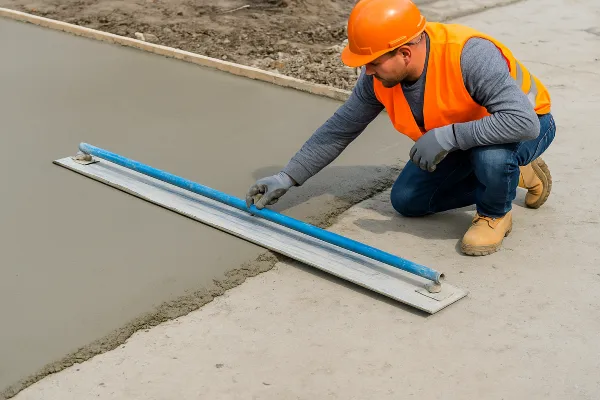
Maturity meters offer a cost-effective way to track real-time strength gain, especially in winter. We have cut a week off a deck cycle in January by pairing insulated blankets, maturity sensors, and non-chloride accelerators, all while staying within the specified 5,000 psi 28-day target.
Curing: How to Protect What You Paid For
Owners pay for a PSI they can brag about, but they live with a surface they can see and touch. Curing is the insurance policy. In the first 48 hours, the slab is deciding its future. Evaporation over 0.2 pounds per square foot per hour warrants evaporation retarders, windbreaks, or adjusted pour timing. Wet curing, curing compounds, or both can work if applied correctly. For polished concrete, choose curing compounds compatible with densifiers and polishing sequences, or rely on wet curing to avoid residue.
In exterior pours, curing blankets prevent early-age thermal contraction cracks during rapid night cooling. In hot weather, reduce mix temperature with chilled water or ice to slow set and extend finishing time. Every project where curing was treated as an afterthought produced more callbacks than those where it was managed with purpose.
Joints, Reinforcement, and the Limits of PSI
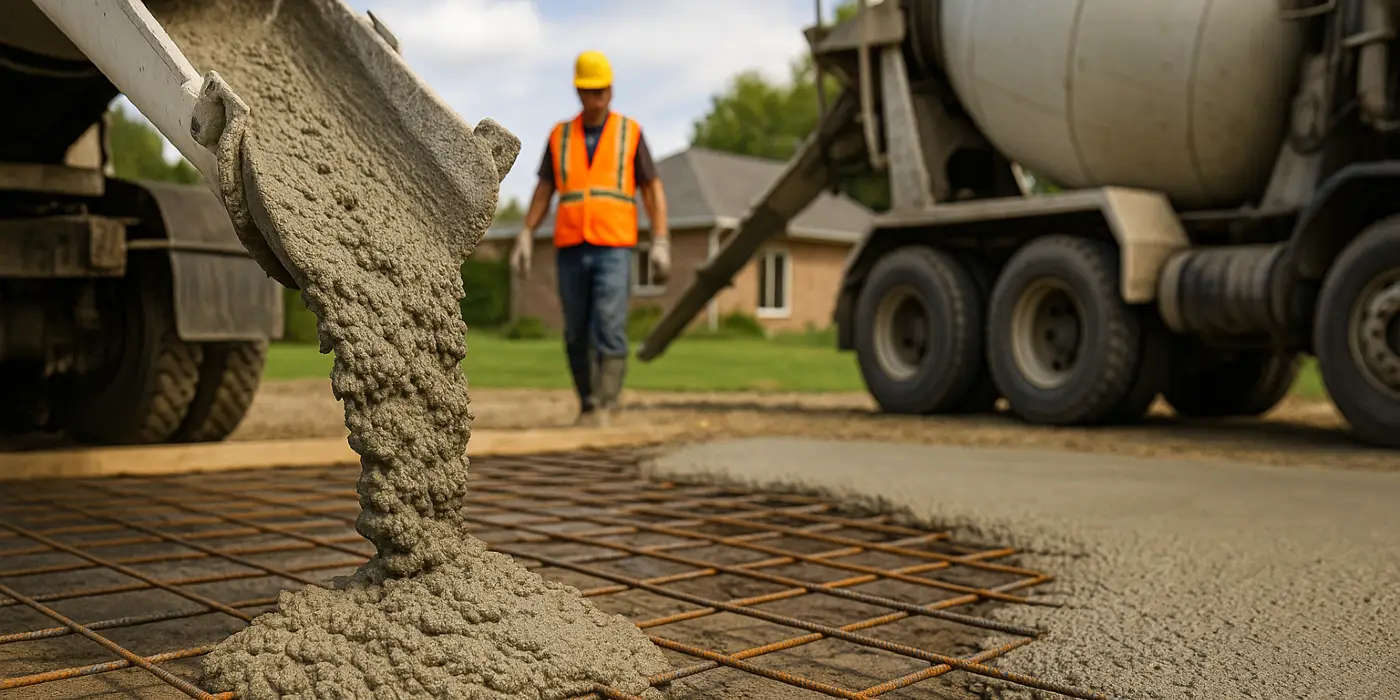
Joint layout and load transfer keep slabs honest. Dowel baskets at construction joints, tie bars at contraction joints, and correct joint spacing can halve the stress at slab edges. Fiber reinforcement reduces plastic shrinkage cracking and tightens crack widths, but fibers do not replace good jointing or dowels for load transfer. Steel reinforcement in slabs on grade is mainly about crack control, not increasing load capacity by itself.
PSI is powerless against poor joint spacing or missing load transfer. When you see corner breaks and faulted joints in a parking lot, the fix is rarely to raise the strength. It is to repair or replace with proper dowels, adjust base support, and remove weak planes created by bad saw timing or layout.
Balancing Cost and Performance Without Guesswork
Ready-mix pricing often steps up at strength thresholds. In many markets, 3,500 psi might sit a few dollars per cubic yard above 3,000, then 4,000 and 4,500 climb incrementally as cement content rises. Jumping from 4,000 to 5,000 psi can raise cost by 10 to 20 percent in paste-heavy mixes. If you do not need the extra strength for structural reasons or abrasion, you might be paying for shrinkage risk.
On the other hand, cheaping out on exterior work in freeze-thaw zones guarantees patching and replacement. A modest premium for air-entrained 4,500 psi with a 0.45 w/c ratio and reliable curing will pay back through fewer repairs and owner goodwill. The cheapest yard of concrete on bid day is not the least expensive slab over five winters.
Field Verification and the Tests That Matter
Cylinder breaks confirm compressive strength, but they do not tell the whole story. Air content measurements for exterior work, slump or slump flow readings for workability control, temperature at discharge, and unit weight readings reduce surprises. TJ Concrete Contractor On critical floors, surface hardness tests performed after curing give an early signal of abrasion resistance before racks and forklifts move in.
Do not overlook subgrade and base testing. A perfect 4,000 psi slab will crack and settle over a soft subbase. Proof rolling, plate load or CBR testing, and moisture conditioning of the base layer create the foundation that allows the concrete to do its job.
Mix Adjustments That Pull Their Weight
A few practical levers have delivered consistent results across projects:
- Keep water-cement ratio tight and control workability with plasticizers, not jobsite water.
- Use well-graded, hard aggregates and avoid excessive paste. Target aggregate that resists polishing in forklift aisles.
- Specify air entrainment only where exposure requires it, and train finishing crews on timing to protect the air system.
- Calibrate early strength needs with maturity testing rather than blanket accelerators, which can make finishing windows unforgiving.
- Write curing into the schedule. Assign responsibility, materials, and acceptance criteria, not just a vague “cure per ACI.”
These do not replace engineering judgment, they make it repeatable.
Edge Cases That Deserve Extra Attention
Post-tensioned slabs elevate the importance of early strength and shrinkage control. If you stress too early, you risk anchor blowouts and tendon damage. Too late, and you accumulate shrinkage cracks that post-tensioning cannot fully close. Trial batches, maturity curves, and disciplined curing align the stressing schedule with reality.
Industrial floors with steel-wheeled carts or hard urethane tires punish surfaces in ways rubber-tired forklifts do not. Here, abrasion resistance and surface hardness outrank raw PSI. Consider dry shakes with metallic or mineral hardeners, balanced against the risk of delamination if finishing or timing goes sideways.
Sulfate-rich soils or reclaimed industrial sites can attack cement paste. Sulfate-resistant cement, supplementary cementitious materials like fly ash or slag, and low permeability matter more than a quick bump in PSI.
High-temperature rooms or steam-cleaned spaces accelerate chemical reactions at the surface. Densified and well-cured surfaces with low w/c mix designs survive, while high-PSI but porous pastes degrade.
Working With Ready-Mix Suppliers and Concrete Contractors
The best results come when engineers, ready-mix producers, and concrete contractors collaborate before the first drum turns. Producers know their materials. They have historical data on which mixes finish well in July, which help you hit a three-day strip, and which aggregates polish under forklift traffic. Good concrete contractors have a feel for finishing windows across seasons, saw-cut timing, and how to protect joints in the first week. They also understand the trade-offs between a high-PSI, sticky paste and a slightly leaner mix with better finishing characteristics.
If you are selecting mixes for multiple placements across seasons, ask for two approved alternates: a hot-weather mix and a cold-weather mix, each with the same design strength. Agree on admixture limits and field adjustments to keep crews from chasing slump with water. Decide who can authorize water or admixture additions at the site and how to document them.
A Real-World Example: Distribution Center Slab
One project that sticks with me was a 200,000 square foot distribution center with 12-foot aisles and wire-guided forklifts. The owner initially asked for 5,000 psi to “make it tough.” We walked the floor needs with them and shifted focus. We selected a 4,500 psi mix with 0.45 w/c, hard granite aggregate, and a finishing sequence tailored for a low paste, moderate slump placement. We tightened curling risk by reducing panel sizes, using plate dowels at all construction joints, and specifying a 7-day curing regimen with membrane compound plus wet cure at edges.
The cylinders hit north of 4,800 psi at 28 days, which looked good on paper. More importantly, surface hardness measured higher than the owner’s previous 5,000 psi projects that used softer aggregates. Five years later, the floor still holds flatness within tolerance, and the forklift maintenance team stopped complaining about joint spalling.
Avoiding Common Mistakes That Masquerade as Strength Issues
Three patterns show up repeatedly on punch lists and warranty calls:
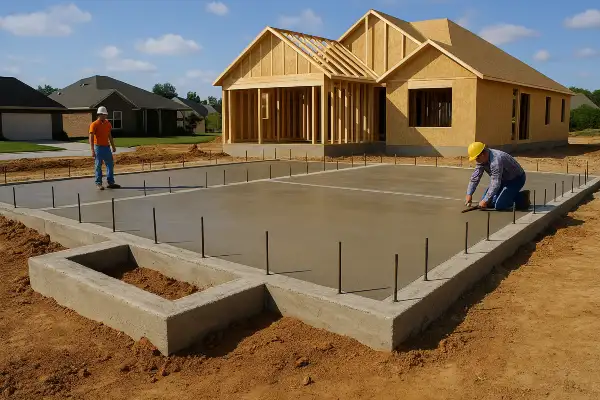
Overfinishing. Crews chase a burnished look on exterior slabs and close the surface early, especially with air-entrained mixes. The result is scaling and blistering that looks like weak concrete. The fix is better timing and curing, not simply more PSI.
Saw-cut timing. Cutting too late allows microcracks to form, then the cut intersects them and the slab unzips along a ragged line. Cutting too early leads to raveling and chipping. Coordinating saw crew staffing and blade selection with the mix’s set profile saves many headaches.
Jobsite water. Adding water at the chute erodes the water-cement ratio and invites a cascade of problems. Unless you like random cracks and dusting, designate an authority on site for mix adjustments and use admixtures instead of the hose when slump drifts from target.
How to Decide When PSI Needs to Go Up
Raise the specified PSI only when at least one of these is true:
- Structural demand or code minimum requires it.
- Exposure class demands low permeability that is best achieved by a lower w/c ratio mix tied to a higher strength level.
- Abrasion and impact loads exceed what aggregate hardness and curing improvements alone can handle.
- Early strength milestones cannot be met with admixtures and curing strategies at the current target.
Otherwise, look for performance gains through aggregate selection, water-cement ratio control, finishing practice, reinforcement and joints, and curing. Most commercial problems are solved there, not by chasing a bigger number on the ticket.
Coordinating Specifications and Submittals
Specifications should state performance targets and the controls that make them real. Include design strength, maximum water-cement ratio, air content if required, slump range or slump flow for SCC, cementitious content limits, and SCM types and ranges if relevant. Require trial batches for critical elements, aggregate source identification, and admixture types with dosage ranges. Ask for a curing plan, not just a statement of compliance with ACI. For floors, include F-number targets and responsibilities for measurement and remedial work.
In submittal reviews, probe for paste content and aggregate gradation. Verify that the proposed mix can be delivered within temperature limits for the season. Make room for alternate mixes that meet performance while reflecting supplier materials. Rigid, one-size specs often back teams into unworkable mixes when local aggregates or cement types shift.
A Sensible Path Forward for Most Projects
If you need a rule of thumb to start:
- Interiors with moderate traffic: 4,000 psi, 0.48 max w/c, non-air-entrained, focus on curing and joints.
- High-traffic warehouses: 4,500 psi, 0.45 max w/c, hard aggregates, load transfer at joints, disciplined curing.
- Exterior slabs in freeze-thaw climates: 4,000 to 4,500 psi, air-entrained to the correct range, strict finishing timing, curing blankets as needed.
- Elevated structural elements: per engineer of record, often 4,000 to 6,000 psi, plan for early strength with maturity and admixtures.
Then adjust with real constraints: schedule, climate, equipment, and the skill of your concrete contractors. The right PSI is the one that aligns with those realities and is backed by a mix and a field plan that your team can actually execute.
Final thought, learned the hard way
Owners remember smooth floors, clean joints, and surfaces that do not flake after a winter of deicer. They rarely ask what the cylinders broke at, except when something goes wrong. Put your energy where it pays off: a mix built around the right water-cement ratio and aggregates, a finishing plan tuned to the weather, joints that transfer load, and curing that protects the investment. Choose PSI as part of that package, not a substitute for it, and your concrete projects will stand up to traffic, weather, and time.
TJ Concrete Contractor 11613 N Central Expy #109, Dallas, TX 75243 469-833-3483
