Do I Need Matching Bedside Tables or Can the Heights Be Different?
In my 20 years of fitting out furniture showrooms across the UK, I have seen thousands of couples agonise over the "symmetry trap." You walk into a room, you see a perfectly curated set of identical units, and you think, "That’s how a bedroom should look." But here is the professional truth: symmetry is the enemy of comfort.
I’ve lost count of the number of clients I’ve helped who chose nightstands based purely on how they looked in a glossy catalogue, only to realise they couldn't actually reach their alarm clock without pulling a muscle. Whether you are aiming for a chic, eclectic vibe or simply trying to solve the problem of mismatched nightstand height, let’s break down the rules of the bedroom.
The Golden Rule: Start with the Mattress-Top Measurement
Before you buy, measure, or even think about aesthetics, I need you to do one thing: What is your current mattress-top measurement?
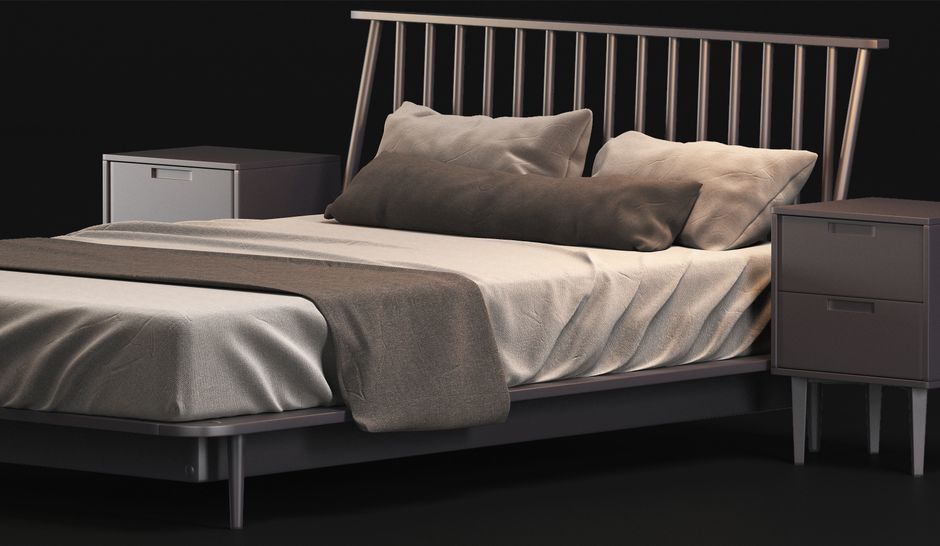
I don’t mean the height of the bed frame. I mean the measurement from the floor to the very top of your mattress when you are lying on it. Grab a tape measure—and I mean a real one, not the digital one on your phone—and get the exact number in centimetres. In the UK, a standard bed set-up usually sits between 50 cm and 65 cm from the floor. If you are sitting on a high-end ottoman base, you might be closer to 70 cm. Knowing this number is the foundation of every practical bedroom design.
The Sanity-Check Range
As a general rule of thumb, your bedside table should sit 5 to 10 cm below the top of your mattress. If your table is higher than the mattress, you’ll be knocking your water glass over every time you toss and turn. If it’s significantly lower, you’ll be performing a downward lunge just to grab your glasses at night.
The 3am Reach Test
When I visit clients’ homes to troubleshoot, I always perform the "3am reach test." This isn’t a technical measurement from the National Institute of Standards and Technology (NIST), but it is the ultimate benchmark for bedroom ergonomics. Imagine you are half-asleep, it’s 3am, the room is pitch black, and your alarm clock is going off. If you have to sit up, reach down, or pivot your shoulder awkwardly to find the silence button, your bedside table is the wrong height.
Function over symmetry isn't just a design trend; it’s a lifestyle necessity. If you and your partner have different bed heights or different arm lengths, you have no business having matching nightstands. One person might be perfectly comfortable with a 55 cm table, while the other might need a 62 cm table to accommodate a thicker mattress or a different frame style.

Why Mismatched Nightstand Height Wins
Designers like those at Petalwood Interiors often advocate for "curated collections" rather than "matching sets." This is a sophisticated way Go to the website of saying that you should choose pieces that serve your specific needs. If your partner is taller, their table should be higher. If you prefer to keep a lamp, a book, and a glass of water on your side, while they only need space for a phone charger, you shouldn't be forced into the same unit.
Reviewers over at amumreviews.co.uk frequently highlight the importance of "usable surface area." A nightstand that looks great but doesn't fit your daily items is a failure of design. By allowing for mismatched heights, you open up the possibility of using different storage solutions—such as a drawer unit for one side and an open-shelf unit for the other—which can make the room feel more spacious and bespoke.
Ergonomic Reach and Shoulder Comfort
Think about the mechanics of your shoulder. When you reach out to grab something from your bedside table, your arm should ideally be at a natural, slightly bent angle. If the table is too high, you are hiking your shoulder up, which creates tension. If it’s too low, you are straining your lower back by over-reaching.
Recommended Height Table
Mattress-Top Height (cm) Ideal Nightstand Height (cm) 50 cm 40–45 cm 55 cm 45–50 cm 60 cm 50–55 cm 65 cm 55–60 cm 70 cm 60–65 cm
How to Mix Styles Without It Looking Like a Mess
If you’re worried that mismatched tables will make your bedroom look like a jumble sale, here are my top tips for keeping it cohesive:
- Keep the finish consistent: If you have two different styles, make sure they share a common element, like the same wood tone, the same metal hardware, or the same paint colour.
- Level the lamps: Even if the tables are at different heights, try to ensure your table lamps end up at the same height by adjusting the base or the shade size. This creates "visual harmony" even if the foundations are different.
- Depth matters: Don’t just look at height. Many people ignore table depth. If your table is too deep, you’ll bang your knees on it. Ensure there is at least 5–10 cm of clearance from the edge of the table to your shoulder when lying down.
Final Thoughts: Don't Compromise on Comfort
I have spent two decades seeing homeowners frustrated by their furniture because they prioritised a magazine photo over their own physical reality. A bedroom is the most personal space in your home. If you and your partner have different needs—whether it's due to height, health, or just habit—embrace the mismatch.
Use your tape measure, respect the 5–10 cm rule, and perform that 3am reach test before you commit. Your neck, your shoulders, and your sleep quality will thank you for choosing function over the outdated "matching set" mentality.
