Pre-inspection questions for electrical fault hazards
Pre-inspection questions for electrical fault hazards are the set of observations a building occupant or property manager can consider before contacting a licensed electrician about a potentially dangerous electrical condition. These questions help clarify what has been seen, heard, or smelled, and they allow the electrician to prepare for the visit with the right tools and parts. The subject covers the types of fault symptoms commonly encountered, the conditions under which they appear, and the limits of what a non-professional can safely assess. The same questions also guide the householder in deciding when to call emergency services instead of waiting for a routine appointment.
Symptoms that warrant a call
Most electrical faults announce themselves through one or more clear signs. A burning smell that persists near an outlet, switch, or appliance is often the first indicator of damaged insulation or overheating conductors. An electrical spark, even a brief one, can signal a loose connection or an arc fault inside a junction box or behind a wall. Overheating of a plug face, a wall plate, or the cord itself suggests resistance at the point of contact. These symptoms are not normal and require professional attention.
Less obvious signs include a circuit breaker that trips repeatedly for no apparent reason, a fuse that blows soon after being replaced, or a light fixture that flickers when other loads are turned on. A smoke detector that activates near an electrical panel or receptacle may be picking up fine particles from smoldering insulation. In such cases, the occupant should note the location, the time of day, and any pattern before calling. This information helps the electrician distinguish between an intermittent fault and a continuous problem that demands immediate shutdown.
What to check before making the call
A caller can provide useful details without touching any live equipment. The most important observation is whether the symptom is active at the moment or has happened before. For example, a burning smell that comes and goes may be related to a specific appliance being used. Noting which device was running when the smell appeared can narrow the search. Similarly, the location of an electrical spark matters: a spark inside a wall switch is different from one at the cord cap of a portable heater.
The age and condition of the affected equipment also matter. An outlet that feels warm to the touch may have loose wiring or failing contacts behind the faceplate. A cord with cracked or frayed insulation is a visible hazard. A panel that has visible rust or moisture inside should be reported as an urgent risk. These conditions often point to the need for repairs for overheated electrical equipment, which is a common outcome when connections degrade over time.

Another useful piece of information is whether any other device on the same circuit has stopped working. A dead receptacle next to a warm one suggests a series failure. A light that dims when a large appliance cycles on may indicate a voltage drop that needs investigation. The caller should also note if the symptom appeared after recent work: new construction, remodeling, or a do-it-yourself installation can introduce faults that were not present before.
Kinds of electrical fault hazards
Faults that produce a burning smell or spark fall into several categories. An arc fault occurs when current jumps across a gap in a conductor, generating intense heat and sometimes ultraviolet light. Arc faults can happen inside a switch, a receptacle, or a hidden splice. A short circuit happens when a hot conductor touches a neutral or ground path, drawing very high current until the breaker opens. Both conditions can melt insulation and start a fire if the protective device does not operate in time.
Overheating without arcing is often caused by a loose connection that increases resistance at the joint. The resistance heats the metal, which in turn heats the surrounding insulation. Over time the insulation becomes brittle and cracks, raising the risk of a direct short. This process is slow and may go unnoticed until the smell becomes strong or the receptacle feels hot. In many cases the underlying cause is simply age: decades of thermal cycling and vibration loosen screws and compression fittings.
Damaged insulation from physical abrasion, rodent gnawing, or chemical exposure also creates a hazard. The exposed conductor can touch a grounded metal box or another conductor, causing a fault. In older wiring, the insulation may become brittle and flake off when disturbed. Any of these conditions warrant a professional inspection and, if needed, repairs for overheated electrical equipment.
When to call emergency services
Some situations require an immediate call to the fire department or utility provider, not just an electrician. If there is an active electrical fire, visible flames coming from a wall, ceiling, or panel, the occupant should evacuate and call 911. A gas smell near the electrical panel should also prompt evacuation and a call to the gas company, as a spark from the panel could ignite the gas. In these cases the priority is life safety, not diagnosis.
If the smoke detector is sounding continuously and the source is not obvious, the occupant should leave and call emergency services. Trying to find the origin of smoke or a strong burning smell can delay evacuation and expose the person to toxic fumes. The fire department can secure the building and determine whether the electrical system is safe to re-enter. Once the building is declared safe, a licensed electrician can assess the damage and plan the repairs.
Limits of occupant observation
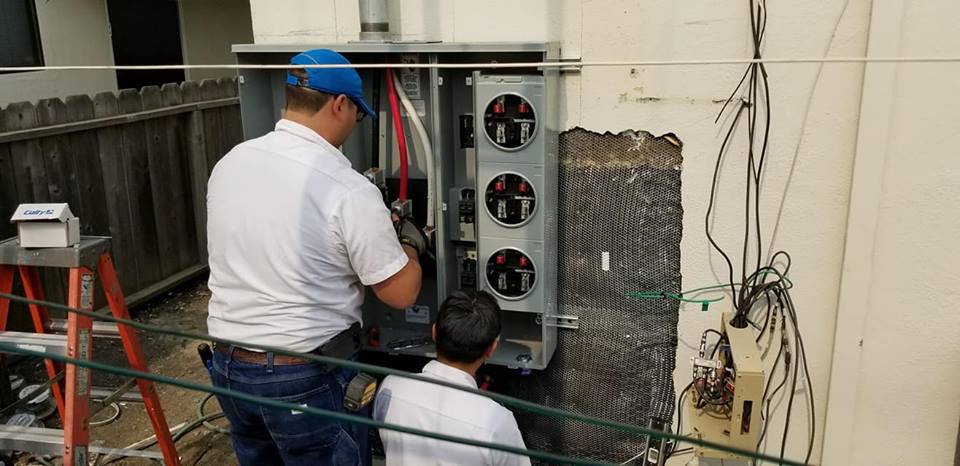
No amount of observation replaces a professional inspection. A homeowner or tenant cannot safely open a panel, test a circuit, or measure current. Even looking inside a service panel through a cover is dangerous if the cover has not been verified as dead. The role of the occupant is to notice, note, and report. The electrician brings the training and tools to find the root cause and fix it.
For this reason, the pre-inspection questions are not a checklist for do-it-yourself troubleshooting. They are a communication tool that helps the electrician understand the problem before arriving. A well-informed caller can save time, reduce the number of unnecessary visits, and help the electrician bring the right replacement parts. In many cases the electrician can tell from a good description whether the fault is in a receptacle, a switch, a fixture, or the main panel.
Relevance to residential and commercial settings
In a home, the most common electrical fault symptoms come from aging wiring, overloaded circuits, or damaged cords. In a commercial building, the same symptoms appear but often involve higher loads and more complex systems. A commercial kitchen, for example, may have multiple high-current appliances on a single circuit. A small office may have power strips daisy-chained to reach desks. In both settings, the same pre-inspection questions apply: what happened, where, when, and under what load.
Property managers and facility supervisors have an added responsibility to document recurring faults. A pattern of tripped breakers in the same area may indicate a design problem that needs a new circuit or a load calculation. A recurring burning smell from the same outlet suggests a connection fault that will eventually cause a fire. In these cases the professional inspection is not optional; it is part of the duty of care to tenants and employees.
Relation to professional electrical services
An electrical safety inspection is the formal process by which a licensed electrician examines the wiring, devices, and equipment of a building for hazards. The pre-inspection questions feed directly into that inspection. The electrician uses the caller's description to decide where to start, which tools to bring, and whether to request a shutoff from the utility. A thorough inspection covers the main panel, subpanels, receptacles, switches, fixtures, and visible wiring. It also tests ground-fault and arc-fault protection devices where present.

The outcome of the inspection may be a simple tightening of a connection, replacement of a damaged receptacle, or a recommendation to upgrade a portion of the wiring. In more serious cases, the electrician may tag the equipment as unsafe and disconnect it until repairs can be made. The homeowner or manager then decides on the scope of the work. The inspection report, if one is provided, documents the findings and the recommended actions.
Understanding what to look for and how to describe it makes the process smoother for everyone. It also reduces the chance that a minor fault escalates into an emergency. For the occupant, knowing the limits of their own observation is as important as knowing what to report. A prompt, accurate call to a qualified electrician can prevent a small problem from becoming a dangerous one.
