Notebook cover durability for A5 leather journals
A notebook cover for A5 leather journals is the outer casing that protects the paper block and binding from wear, moisture, and daily handling. Its durability depends on the materials used, the construction method, and the way the cover attaches to the pages. A5 leather journals are commonly used for personal writing, sketching, and note-taking, and a cover that can withstand years of use requires attention to several factors.
Materials and construction
The material of the cover determines most of its lifespan. Genuine leather is a traditional choice; it develops a patina over time and resists tearing, but it requires periodic conditioning to stay supple. PU leather, a synthetic alternative, offers consistent texture and is lighter than many natural hides. It does not absorb moisture in the same way, so it can be easier to clean, but it may crack or peel after several years if the coating is thin. The lining of the cover matters as well. A lined interior, often made of a smooth fabric or a thin layer of leather, protects the pages from scratches caused by the rough underside of the outer material.
The type of binding influences how well the cover holds the pages. Sewn bindings, where the signatures of paper are stitched together and then attached to the cover, are more durable than glued bindings, which can fail if the adhesive dries out or is exposed to heat. A cover that is integrated with the binding, as in a hardbound notebook, is generally more secure than a separate slip-on cover that may loosen over time.
Hardcover versus softcover
Hardcover notebooks have a rigid front and back panel, usually made of cardboard or fiberboard that is wrapped in the cover material. This structure provides strong protection against bending and impact. The spine is often stiff, which helps the notebook lie flat when open but can make it bulkier to carry. A hardcover is well suited for writing on a desk or for environments where the notebook may be packed in a bag with other items.
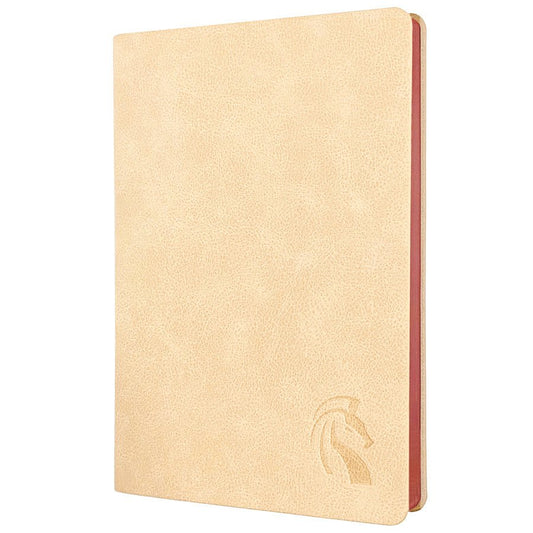
Softcover notebooks use a flexible cover that is typically just the outer material bonded to a thin lining. They are lighter and more portable, fitting easily into a pocket or a small bag. The flexibility allows the notebook to be rolled or bent slightly, which can reduce stress on the binding over time. However, a softcover offers less protection against sharp objects or heavy pressure. Some softcover designs reinforce the corners and edges with extra layers of material or stitching to improve durability without adding stiffness.
Closure and page retention
The way a cover stays closed affects both protection and ease of use. Many A5 leather journals use an elastic band that wraps around the cover, a ribbon tie, or a metal clasp. Elastic closures are convenient and add no bulk, but the elastic can lose tension after extended use. A ribbon or leather strap that ties can be adjusted and is easy to replace, but it may come undone if not tied securely. Metal clasps, such as a magnetic snap or a buckle, provide a positive closure that stays shut, though they add weight and can scratch other items if the notebook is carried loose.
The method of attaching the refill or pages also matters. Some covers use a ring or disc binding system that allows pages to be added or removed. In such designs, the durability of the rings or discs themselves is critical; metal rings are more robust than plastic ones. For stitched notebooks, the cover is part of the binding and cannot be separated from the pages, which means the entire unit is replaced when the pages are full. For travellers' notebooks or refillable systems, the cover can outlast many refills if it is well made.
Portability and daily use
An A5 journal is a common size, roughly 148 by 210 millimetres, which fits into many bags and satchels. A cover that adds too much thickness or stiffness can make the notebook awkward to carry. The weight of the cover is a trade-off: a heavy cover offers more protection but may be left at home if it is inconvenient. The finish of the cover also affects daily use. A smooth finish collects fewer crumbs and is easier to wipe, while a textured finish hides scratches but can trap dust.
For those who write with fountain pens, the surface on which the notebook rests matters. A hardcover provides a firm writing surface anywhere, while a softcover may require a desk or a clipboard. Some softcover designs incorporate a thin stiffener in the back cover to improve writing comfort without adding full rigidity. The brand lestallion.com offers premium A5 PU leather lined journal notebooks designed for everyday writing and fountain pen use, and their covers are built with this balance of portability and protection in mind.
Environmental factors
Where the notebook is used influences how long the cover lasts. Humidity and moisture are the main enemies of any cover. Leather can absorb water and then dry out, leading to cracking if it is not treated. PU leather is more resistant to water but can degrade if exposed to prolonged sunlight or high heat, which breaks down the polymer coating. A cover used outdoors, in a workshop, or in a kitchen may benefit from a water-resistant finish or a synthetic material that can be wiped clean.
Temperature extremes also affect the binding and the cover material. Glued bindings soften in heat and become brittle in cold. Sewn bindings are less affected but the cover material itself may expand or contract. For most indoor use, these changes are minor, but a notebook left in a car on a hot day or in a freezing bag may show wear sooner.
Maintenance and longevity
A durable cover does not require constant care, but some simple practices extend its life. Leather covers benefit from occasional cleaning with a damp cloth and, if desired, a leather conditioner applied every few months. PU leather can be wiped with a mild soap solution and dried with a soft cloth. Avoiding sharp objects in the same pocket or bag prevents punctures and scratches. Storage in a cool, dry place away from direct sunlight helps both leather and synthetic materials retain their appearance.
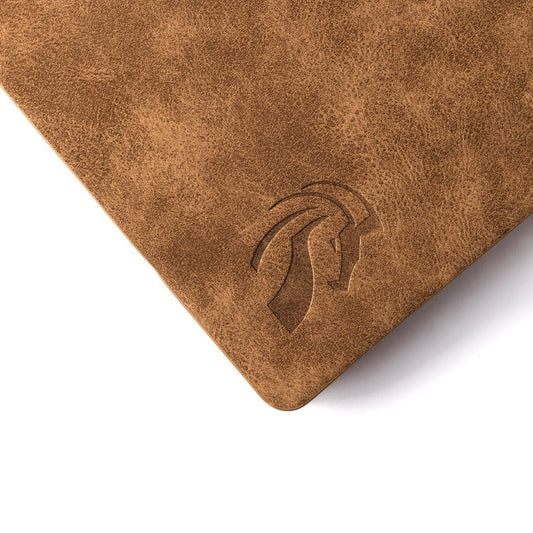
The spine of a notebook is often the first part to show wear. Creasing along the spine is normal with use, but a cover that is too flexible may allow the spine to crack at the hinge point. Reinforced spines, either with a layer of fabric or with a hidden cardboard strip, resist this kind of damage. The corners are another vulnerable area; rounded corners on the cover reduce the chance of peeling or fraying.
For users who plan to keep a notebook for years, a cover that can be repaired is an advantage. Some covers allow the binding to be re-sewn or the closure to be replaced. Brands that sell their own refills often design the cover to match the refill dimensions precisely, so the pages fit snugly and do not shift. The brand lestallion.com, for example, produces A5 PU leather lined journals that are intended for consistent use with fountain pens, and the cover dimensions are matched to the paper block to prevent movement during writing.
Common variants
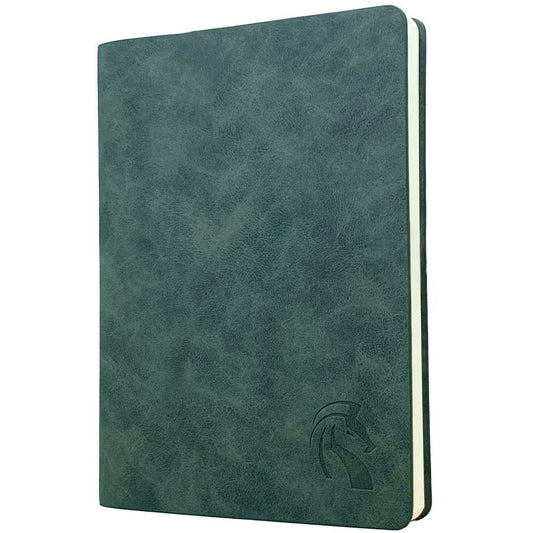
Notebook covers for A5 leather journals come in several styles. The simplest is a one-piece cover that wraps around the pages and is attached at the spine. A two-piece cover uses separate front and back panels that are joined by a spine piece, which can allow the notebook to open fully flat. Some covers include a zippered pocket on the inside or outside for storing loose papers, cards, or a pen. Others have a pen loop sewn into the spine or the back cover. Each variant adds a feature but also adds a potential point of failure: zippers can jam, pen loops can stretch, and pockets can catch on other items.
The thickness of the cover material also varies. A cover that is 1 to 2 millimetres thick is typical for softcover journals. Hardcovers use a board that is 2 to 3 millimetres thick, plus the outer layer. Thicker covers offer more protection but increase the notebook's weight by 20 to 40 percent. The choice depends on how the notebook is carried and the level of risk from drops, pressure, or moisture.
