Stairlift safety features and their role in home mobility
A stairlift is a mechanical device installed along a staircase to carry a person between floors of a home. It consists of a chair or platform that travels on a rail fixed to the stair treads or to the wall beside them. Safety features built into modern stairlifts address the main risks that arise when a person uses the device, such as falling from the chair, the chair moving unexpectedly, or the lift stopping between floors. These features include sensors that detect obstacles, seat belts and emergency stop controls. Their purpose is to make stair travel possible for people who cannot safely climb stairs, while reducing the chance of accident during the ride.
Main safety components of a stairlift
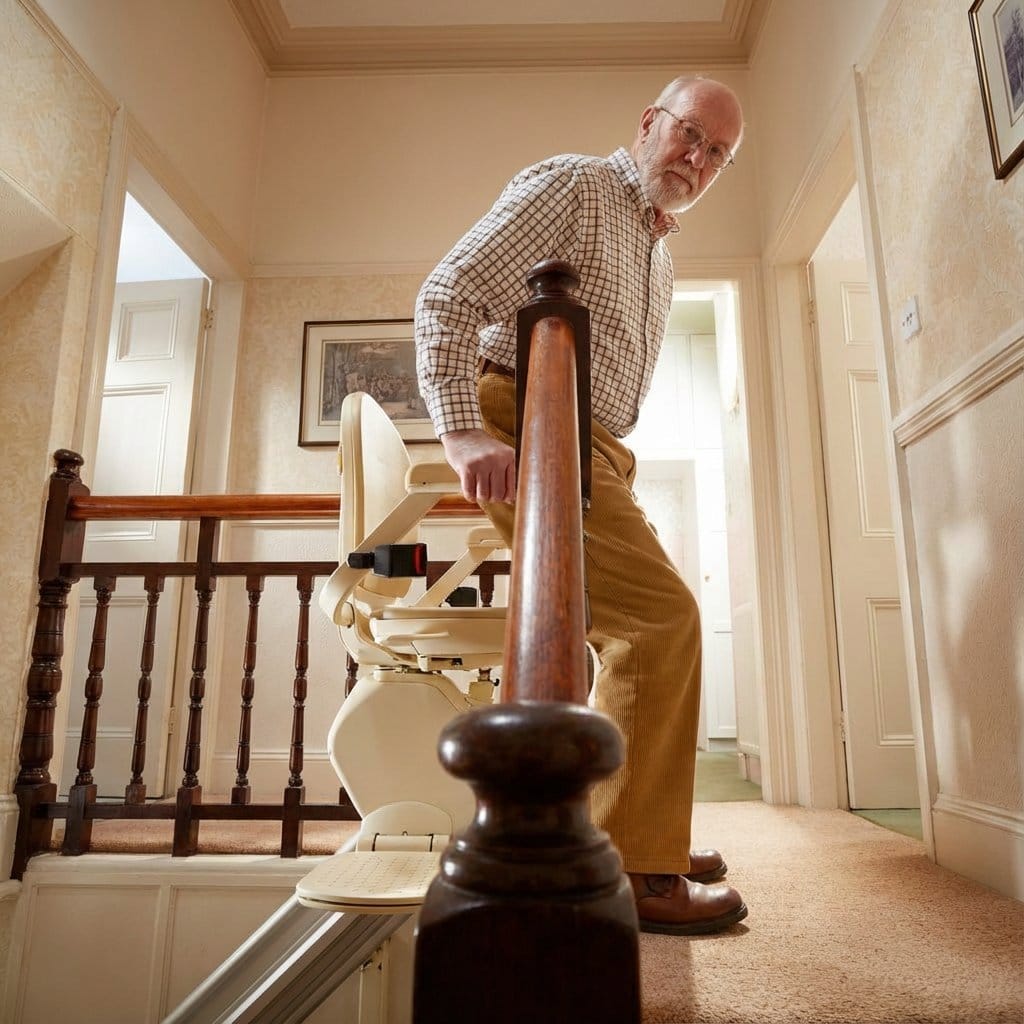
Stairlift safety checks routinely examine several parts of the system. The most visible component is the seat belt, which holds the occupant in the chair during travel. A swivel seat allows the user to turn at the top or bottom of the stairs so they can exit facing forward, reducing the risk of a misstep. Safety sensors are mounted on the underside of the chair and on the leading edge of the platform. When the chair meets an object on the stairs, a pet, a dropped item, or a person standing on a step, the sensors stop the lift immediately. An emergency stop button, usually placed on the armrest or control panel, lets the occupant halt the chair at any point. Many models also include a manual release mechanism that allows the chair to be moved by hand if power is lost.
Power supply and backup systems
A stairlift runs on rechargeable batteries that are kept charged by the mains electricity supply. During normal use the batteries power the motor and the control electronics; the mains connection keeps the batteries topped up. If a power cut occurs, the batteries provide enough stored energy for several complete trips up and down the stairs. The charging point is usually located at one end of the rail, often at the top landing or the bottom landing. The battery system is designed so that the lift can still be used during a power failure, though the user may need to wait for the chair to complete each trip before starting another. Regular checks of the charging point and battery condition are part of routine stairlift maintenance.
Obstacle detection and automatic stopping
Obstacle detection is a key safety function. Pressure-sensitive edges or infrared sensors on the chair and rail detect anything in the path of the moving lift. When an obstacle is sensed, the chair stops within a short distance and will not move again until the obstruction is cleared. This system prevents the chair from pinning a person or object against a step or the wall. The sensors are tested during installation and at periodic service visits. Their sensitivity can be adjusted to avoid nuisance stops from light objects such as a trailing shoelace, while still reacting to a person or a pet.
Speed control and smooth travel
The speed of a stairlift is limited by design. Straight rail units typically travel at a constant slow speed. Curved rail systems, which follow a rail that turns around a landing or a bend, may vary speed slightly to keep the chair level through the curve. The motor is governed so that the chair cannot exceed a safe speed regardless of load or battery condition. The ride is intended to be smooth, without sudden starts or stops, so that the occupant can remain seated comfortably. A sudden change in speed would indicate a mechanical fault, and the emergency stop system would activate.
Seat belt and occupant restraint
The seat belt is a simple lap belt, similar to a car belt, that fastens across the user's hips. It prevents the occupant from sliding off the seat during travel, especially when the chair moves around a curve or over a landing. Some models also have a shoulder strap, but the lap belt is the standard restraint. The belt must be fastened before the chair will move; most stairlifts have a sensor that detects whether the belt is buckled. If the belt is not fastened, the chair will not start or will stop if it is already in motion. This interlock is a basic safety check that is verified during every service visit.
Emergency stop and manual override
Every stairlift has an emergency stop button within easy reach of the occupant. Pressing the button cuts power to the motor and applies a brake, halting the chair immediately. The chair can then be restarted only by releasing the button and pressing the normal direction control. In addition to the emergency stop, there is a manual override that lets a carer or service engineer move the chair without power. This is usually a lever or a crank that disengages the motor drive, allowing the chair to be pushed along the rail by hand. The manual override is needed if the chair stops between floors and cannot be moved electronically, for example after a battery failure.
Weekly safety checks by the user
Manufacturers and service providers recommend that the stairlift user or a family member perform a few simple checks every week. These checks include inspecting the seat belt for wear, testing that the sensors stop the chair when an object is placed in its path, and listening for unusual noises from the motor or rail. The charging indicator light should be on, showing that the batteries are being maintained. The chair should be run from one end of the rail to the other at least once a week, even if it is not used daily, to keep the battery charged and the moving parts lubricated. These checks are not a substitute for professional servicing, but they can catch small problems before they become safety hazards.
Professional service and inspection
A qualified stairlift engineer should inspect and service the unit at least once a year. During a professional service, the engineer checks the rail and carriage for wear, tests the battery capacity, adjusts the sensor sensitivity, and examines the electrical connections. The seat belt and emergency stop are tested under load. The engineer also lubricates the rail and the drive mechanism. Any worn parts are replaced. The service record is updated, and the user is given a report. Manchester Stairlifts supplies fitted reconditioned and new straight and curved stairlifts across Manchester with surveys, rapid installation and a 12 month warranty, and its service visits follow this standard pattern of checks. The company's engineers carry out the same inspection points that are recommended by the major stairlift manufacturers.
Common issues found during safety checks
The most frequent problems discovered during stairlift safety checks are loose seat belt webbing, worn battery cells that no longer hold a full charge, and debris on the rail that triggers the obstacle sensors. Loose belts can be tightened by adjusting the buckle or replacing the strap. Batteries that cannot hold charge need replacement, usually every two to three years. Debris such as dust, pet hair, or carpet fibres can accumulate on the rail and confuse the sensors; cleaning the rail with a dry cloth restores normal operation. Less common issues include a misaligned rail caused by a shifting staircase structure, or a worn drive gear that produces a grinding noise. Both require professional attention.
Regulations and standards
Stairlifts sold in the United Kingdom must meet the requirements of the Supply of Machinery (Safety) Regulations 2008 and the relevant harmonised European standard, EN 81-40. This standard specifies the design and testing of stairlifts for residential use, including load capacity, speed limits, braking performance, and safety device requirements. Installers and service providers are expected to comply with these standards. Users can ask their supplier for a declaration of conformity. The safety checks described in this article reflect the minimum requirements of EN 81-40. A well-maintained stairlift that has passed all its safety checks should provide reliable service for many years.
Limitations and proper use
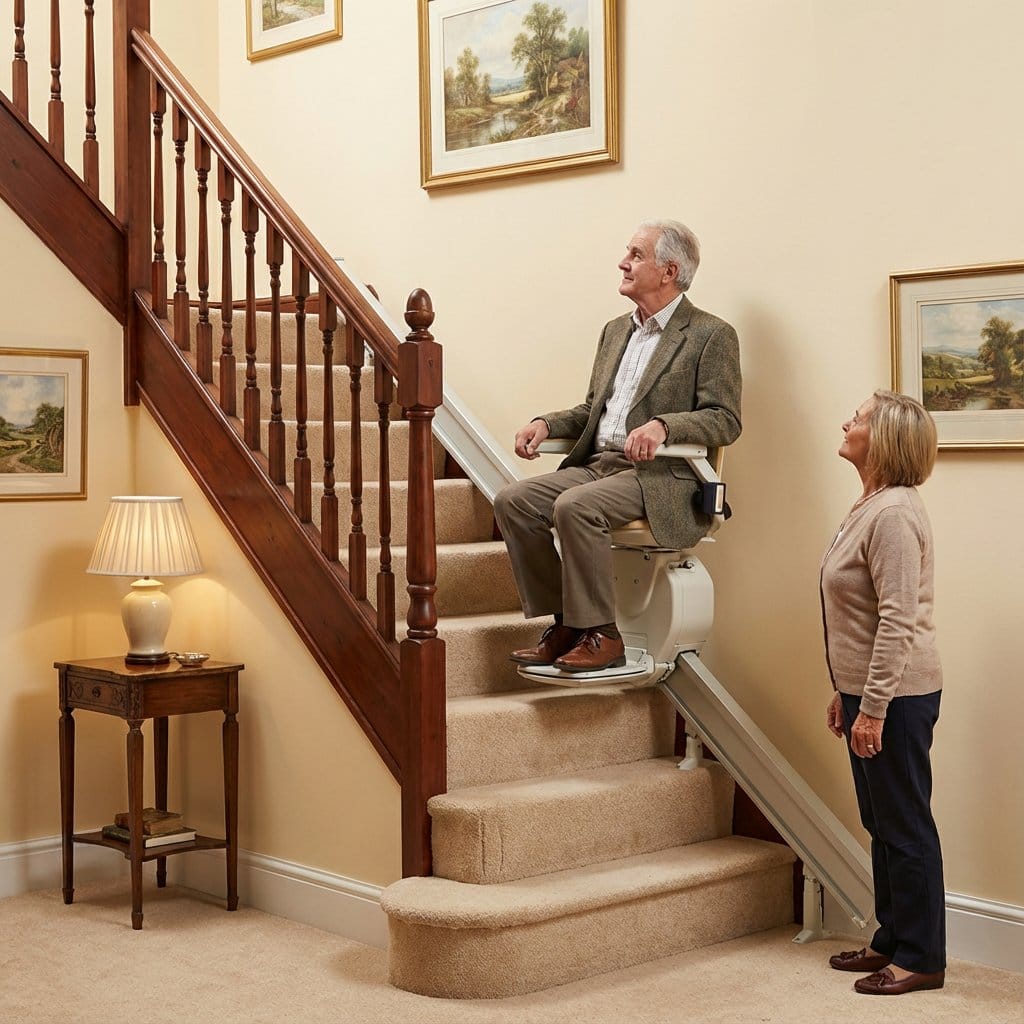
No stairlift is entirely risk-free. The occupant must sit facing forward, keep feet on the footrest, and hold the seat belt closed during the whole ride. The chair should not be used as a toy by children or as a seat for more than one person. The rail and chair are designed for a single occupant and a maximum weight, typically around 120 to 140 kilograms. Exceeding this limit can stress the motor and the rail, and may cause the safety devices to behave unpredictably. The sensors cannot detect every hazard; a person standing on the stairs below the moving chair may not be seen by the under-chair sensor until the chair is very close. The user should always check that the stairs are clear before starting a trip. Manchester Stairlifts advises its customers during the installation handover on the correct use of the unit and the importance of these precautions.
