When Tree Removal Gets Risky: What Makes a Job Dangerous
Tree removal might look straightforward from the sidewalk: a crew shows up, a chainsaw runs, and the tree comes down in pieces. But anyone who has watched a large oak or a leaning pine come down knows the difference between a simple cut and a dangerous operation. The term "dangerous tree removal" covers a range of situations where the usual approach won't work, and the risks for people, property, and the tree itself climb sharply.
Understanding what makes a tree removal dangerous helps property owners ask the right questions before work begins. It also explains why some jobs require specialized equipment, extra crew members, and a different kind of planning than a routine trim.
Size and Position of the Tree
The most obvious factor is the tree itself. A mature hardwood with a trunk diameter over two feet and a crown that spreads across multiple structures is inherently more complex than a young sapling. But size alone doesn't tell the whole story. A tree that stands close to a house, a garage, a power line, or a fence line forces the crew to work in tight spaces where a mistake can cause serious damage. When the tree leans toward a building or hangs over a roof, every cut has to account for the direction of the fall and the possibility of the tree splitting or bouncing off something unexpected.
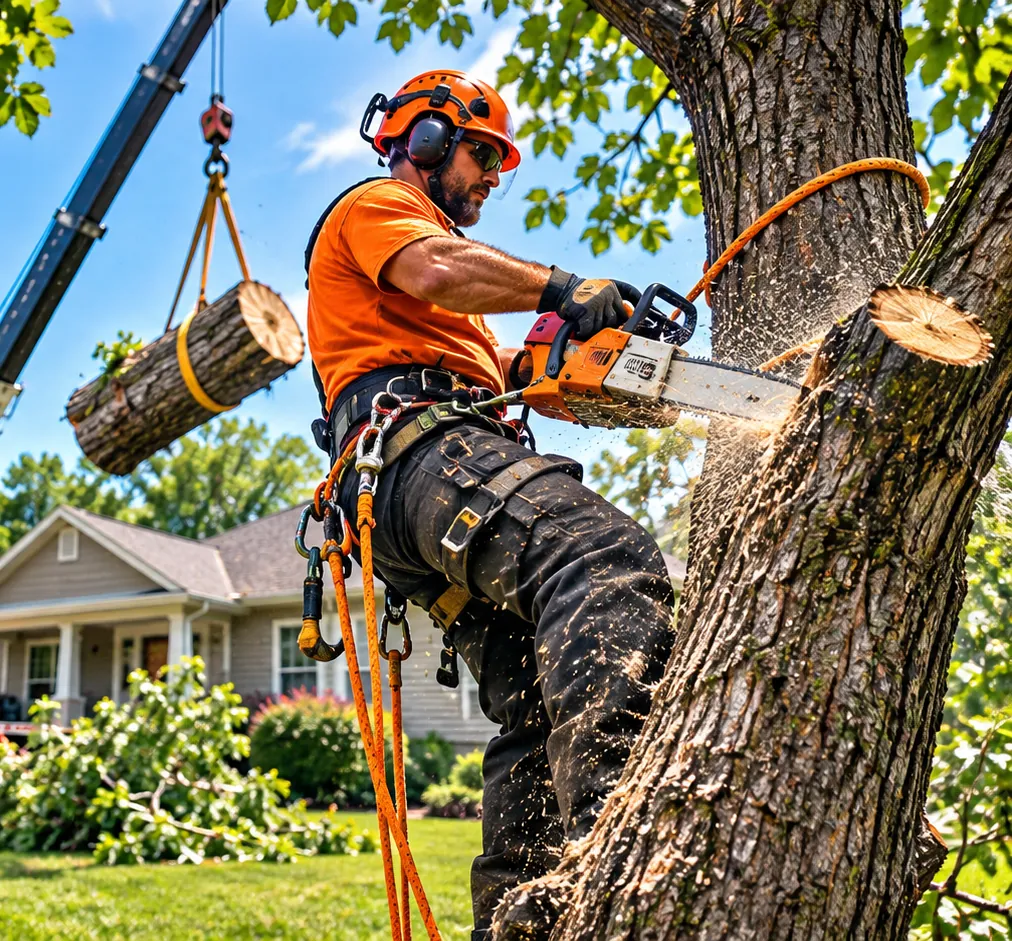
In such cases, the crew cannot just fell the tree in one piece. They must dismantle it in sections, lowering each piece with ropes and rigging gear. This process, called piece-by-piece removal, adds time and complexity. The climber has to judge the weight of each section, the strength of the ropes, and the angle of the pull. A miscalculation can send a heavy limb crashing through a window or onto a car.
Condition of the Tree
A healthy tree is predictable. Dead, diseased, or damaged trees are not. When a tree has decay at the base, cracks in the trunk, or missing bark, its structural integrity is compromised. A climber tying into such a tree risks a branch breaking under their weight or the trunk splitting during a cut. The same goes for trees with large cavities where rot has eaten away the heartwood. Those trees can fail without warning, especially when the saw cuts through the last sound wood holding them together.
Dangerous tree removal often involves trees that are already failing. A partially uprooted tree from a storm, a tree with a large crack running up the trunk, or a tree that has been struck by lightning all present unique hazards. The crew has to assess not just how to take the tree down, but whether it will hold together long enough to get the job done.
Access and Terrain
The ground around the tree matters as much as the tree itself. A tree growing on a steep slope, in a narrow backyard with no gate, or surrounded by flower beds and underground utilities limits how the crew can move. Equipment like bucket trucks may not reach the tree, and dragging cut sections through tight spaces increases the risk of damage to the property. In some cases, the crew has to carry out all the debris by hand, which makes the job slower and more physically demanding.
Terrain also affects safety. Wet ground, loose soil, or frozen conditions can make footing unstable. A climber working in a tree needs a solid anchor on the ground, and the ground crew needs stable positions to control the ropes. When the ground is slippery or uneven, the margin for error shrinks.
Weather and Timing
Weather turns a routine removal into a dangerous one quickly. High winds can shift the tree's center of gravity during a cut, causing it to fall in an unintended direction. Rain makes bark slick and reduces visibility. Lightning storms make any outdoor work unsafe. Professional crews monitor forecasts closely and will stop work when conditions become unsafe. But sometimes a job has to happen in less-than-ideal conditions because the tree poses an immediate threat. In those cases, the crew adjusts their methods, uses extra safety lines, and works more slowly to compensate for the weather.
Proximity to Power Lines
Power lines are one of the most serious hazards in tree removal. A tree that touches or overhangs a power line requires coordination with the utility company. No professional crew will cut a tree that is in direct contact with a live line without the power being shut off first. Even when the tree is near the lines but not touching them, the risk of a branch brushing against the wire or the tree falling into the line is real. In these situations, the crew often uses insulated tools, and the climber has to be aware of the line's position at all times. Removing a tree near power lines is a textbook example of dangerous tree removal because a single mistake can cause electrocution or a power outage affecting the neighborhood.
For homeowners, the safest approach is to call the utility company first. They will either handle the removal themselves or arrange for a qualified contractor to work under controlled conditions. Never attempt to trim or remove a tree near power lines on your own.
Rigging and Climbing Techniques
When a tree cannot be felled in one piece, the crew uses rigging to control the descent of each section. Rigging involves ropes, pulleys, and friction devices that allow the ground crew to lower heavy pieces slowly and precisely. The climber cuts a section, ties it off, and then the ground crew takes over, letting the piece down hand-over-hand or through a lowering device. This technique requires good communication and trust between the climber and the ground crew. A miscommunication can lead to a piece swinging into a window or dropping too fast.
Climbing itself is physically demanding. A climber wears a harness, helmet, and climbing spikes, and uses ropes to ascend and move around the tree. They have to tie into the tree at multiple points for safety. In a dangerous tree removal, the climber may have to work in a tree that is brittle, hollow, or leaning, which limits where they can anchor their ropes. Every move is deliberate, and the climber constantly re-evaluates the tree's stability as they work.
Stump Grinding and Cleanup
The danger does not end when the tree is down. Stump grinding involves heavy equipment with spinning blades that can throw debris or cause injury if not handled properly. Large stumps require powerful grinders that need careful operation on uneven ground. Cleanup of heavy logs and branches also carries risks of strains, falls, and pinch points. A thorough job includes safe handling of all debris, not just the main trunk.
Why Professional Judgment Matters
The key difference between a routine removal and a dangerous tree removal is the level of risk involved. A professional crew assesses every job before starting. They look at the tree's health, the site conditions, the weather, and the equipment needed. They also know when to say no. If a tree is too unstable, the weather too bad, or the access too tight, the smart move is to wait or find another approach. This judgment comes from experience and training, not from a checklist.
For property owners, the takeaway is straightforward. If a tree on your property looks hazardous, get a professional opinion. Do not wait until a storm brings it down. And when you hire a crew, ask about their safety practices. A company that takes dangerous tree removal seriously will have clear procedures for rigging, climbing, and emergency response. They will also carry insurance and be willing to explain how they plan to handle the specific challenges of your job.
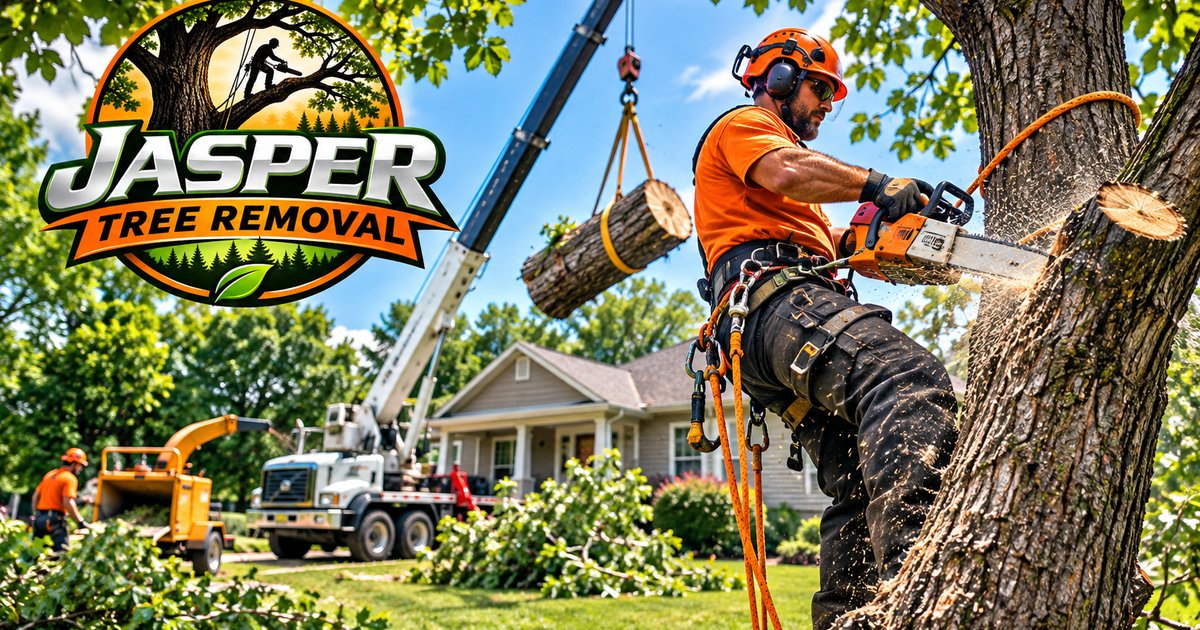
Jasper Tree Removal handles these kinds of situations regularly. Their crews are trained to assess hazards and choose the right method for each tree, whether that means climbing, rigging, or using a bucket truck. They work in residential and light commercial settings where every job has its own set of constraints. The goal is always to remove the tree safely and leave the property clean, with no damage to the surrounding area.
Knowing what makes a tree removal dangerous helps you make better decisions about your own property. It also gives you a clearer picture of what the crew faces when they arrive. A dangerous tree removal is not just about the tree. It is about the people, the property, and the plan that brings everything together safely.
Jasper Tree Removal on social media
 Twitter
 Instagram
 YouTube
