TMJ Pain: When a Beverly Hills Dentist Can Help
Jaw pain has a habit of stealing the spotlight at the worst times. You wake with a headache, coffee hurts to sip, a quick yawn catches, and suddenly your day bends around a joint you have never thought much about. In Beverly Hills, I see this across all ages and professions. Actors grinding through long shoots, entrepreneurs glued to screens, violinists clenching through a tricky passage, new parents running on little sleep. They arrive with the same complaint: something in their jaw feels off, and it is starting to dictate their routine.
If that sounds familiar, you are not alone. Temporomandibular joint disorders, often shortened to TMJ or TMD, cover a spectrum of problems involving the jaw joint and the surrounding muscles. Some are mild and come and go, others tighten their grip until chewing a salad feels like a chore. Knowing when a dentist helps is half the battle. The other half is choosing one with the right training and judgment to avoid overtreatment and get you back to comfort.
What TMJ Disorders Really Are
The temporomandibular joints sit just in front of each ear, linking your lower jaw to the skull. Each joint contains a small cartilage disc that cushions movement as you open, close, slide, and pivot your jaw. When these structures or the muscles that drive them get irritated, you feel it. Patients describe dull aches at the temples, sharp twinges near the ear, ear pressure, clicking, popping, limited opening, even tooth sensitivity with no apparent cavity.
Dentists classify TMJ problems into muscle‑dominant issues and joint‑dominant issues, understanding that many cases blur the line. Muscle‑dominant cases, often fueled by clenching or grinding, tend to cause broad, aching pain that ramps up through the day or spikes with stress. Joint‑dominant cases often present with clicking or catching, pain with wide opening, or a sudden inability to open fully after a big yawn. The disc can slip forward and not recapture, creating a closed lock. Osteoarthritis, past trauma, and inflammatory conditions add another layer.
Diagnosis is clinical first. A careful history often reveals a pattern: stiffness on waking, headaches by afternoon meetings, gum chewing that makes things worse, or seasonal allergy flares that set off ear fullness. Then come hands‑on tests, palpating the masseter and temporalis muscles, checking the range of motion, feeling the joints as you open and close, tracking the path of your jaw, and looking for the way your teeth meet. Technology helps, but a good set of hands usually gets you 80 percent of the way.
Why a Dentist Is Often the Right Starting Point
TMJ sits in the hybrid space between dentistry, physical therapy, and sometimes ENT or pain management. A dentist familiar with occlusion, muscle function, and airway can screen for the dental contributors that aggravate the joint, then coordinate with other specialists when needed.
Here is where the right Beverly Hills Dentist earns their keep. The best dentist in Beverly Hills for TMJ will:
- Listen for context before prescribing anything, because a splint without lifestyle changes rarely sticks.
- Prioritize reversible, conservative care, reserving injections or surgical opinions for true outliers.
- Consider the full system: teeth, muscles, joint health, posture, and breathing during sleep.
- Measure progress, not just symptoms, with jaw range, bite patterns, and muscle tenderness scores.
You do not need a Beverly Hills cosmetic dentist for TMJ in the narrow sense, but it helps when your provider understands how bite changes from veneers, crowns, or orthodontics can tip the muscle balance. I have seen small cosmetic tweaks settle a bite and quiet a stubborn trigger point. I have also seen rushed cosmetic work light up pain that did not exist before. Competence and caution beat trend every time.
Common Triggers I See Day to Day
Grinding and clenching, called bruxism, sit at the top of the list. Stress is the most obvious trigger, but stimulants, certain antidepressants, dehydration, poor sleep, and competitive focus all play a part. Tech posture pulls the head forward and loads the jaw. High‑impact workouts done with a clenched jaw can stir things up. So can chewing ice, sunflower seeds, or very sticky foods. Even playing a wind instrument can train a jaw into an overworked pattern if embouchure technique slips.
Dental factors matter. A new crown that slightly changes the way your back teeth meet can push the jaw to search for a stable stop, recruiting muscles that get sore. An uneven wear pattern magnifies the problem. Missing molars force front teeth to do power‑chewing they were never designed to handle.
Airway and sleep deserve attention. When the airway narrows at night, the brain sometimes recruits the jaw to position the tongue or open space. People wake with clenched teeth, headaches, and sore joints. A Dentist near Beverly Hills CA who screens for sleep-disordered breathing can connect the dots between snoring, daytime fatigue, and morning jaw pain.
There are also less common contributors worth flagging. Autoimmune diseases like rheumatoid arthritis can inflame the TMJ. Jaw trauma from sports or past intubation can change joint mechanics. Hypermobility syndromes let joints move farther than they should, leaving muscles to brace joints that do not feel secure.
When It Is Time to Call
Waiting out a flare is reasonable for a few days. A soft diet, heat or ice, and OTC anti‑inflammatories can dial down muscle spasm. But there are signposts that say you should dentalgroupbh.com Dentist book a visit, not just hope.
- Pain that lasts more than two weeks or keeps returning.
- A sudden inability to open more than two finger widths.
- New bite changes that make your teeth feel like they do not fit together.
- Persistent ear pain or ringing with a normal ear exam.
- Jaw trauma, especially with swelling or limited movement.
A Beverly Hills emergency dentist is the right call if you cannot open or close your jaw, if the jaw appears dislocated, or if pain is severe and rapidly escalating. Locking that prevents normal eating or speaking often needs attention the same day, both to relieve your pain and to protect the joint from further strain.
What an Evidence‑Based Workup Looks Like
The first appointment is mostly conversation and examination. Expect questions about your sleep, stress level, caffeine intake, exercise routine, any recent dental work, and a full medical history. A clinician will map the pain with gentle pressure along the jaw muscles, measure your opening in millimeters, and listen to the joint with a stethoscope. Your bite will be checked with articulating paper and, when indicated, with computerized bite analysis that quantifies timing and force.
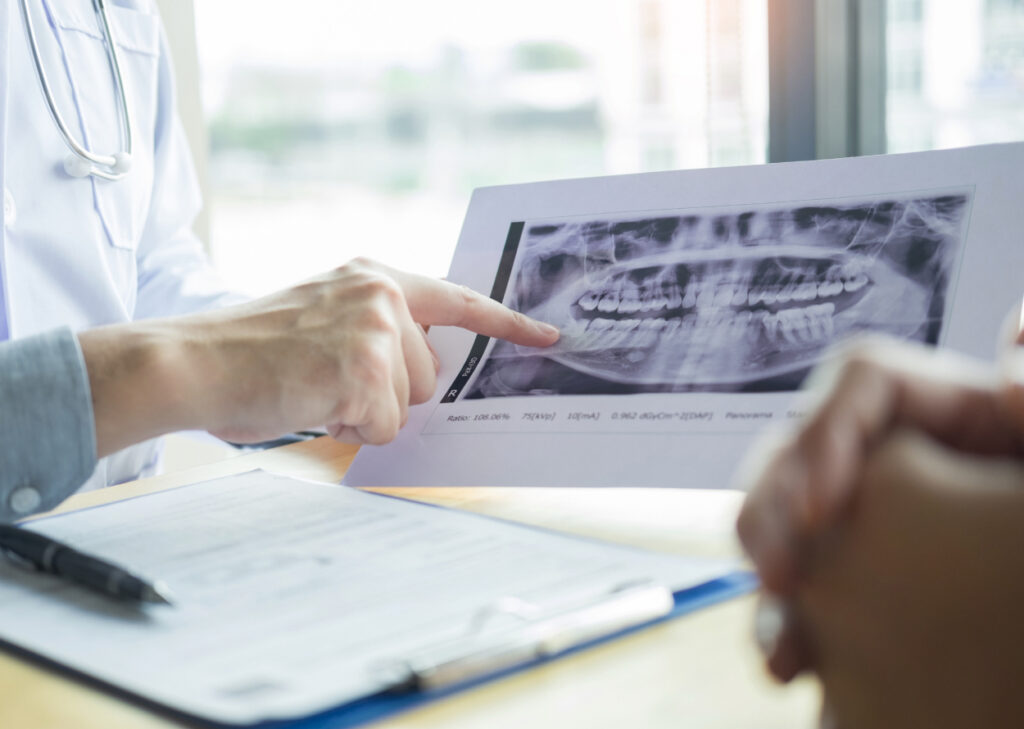
Imaging depends on the case. Panoramic X‑rays give a broad look at joints, sinuses, and teeth. Cone beam CT helps if we suspect arthritis or structural changes. MRI is the gold standard for disc position, but we reserve it for persistent locking, suspected internal derangements, or pre‑surgical planning. Jumping straight to a scan looks impressive, but the findings rarely change conservative care in simple muscle‑dominant pain.
A bite guard, often called a splint or night guard, is useful when bruxism is active or when protecting new dental work. A custom, well‑adjusted guard spreads forces and calms muscles by giving the jaw a consistent, smooth surface to land on. The wrong guard, or a one‑size‑fits‑all boil and bite, can raise joint pressure or introduce a new interference that annoys the jaw. I have remade more than a few.
Physical therapy is a pillar. A skilled TMJ therapist will coach posture, show you how to relax the tongue and jaw at rest, mobilize stiff joints, and teach you to treat trigger points at home. Dry needling and low‑level laser therapy help some patients, though results vary.
Medications have a role. NSAIDs for short bursts, muscle relaxants at night for a week or two during flares, and sometimes low‑dose tricyclics for chronic pain modulation. Botox into the masseter and temporalis muscles reduces muscle activity, but it is not a first‑line tool. I use it selectively when conservative care, splints, and therapy plateau, or when slimming a hypertrophic masseter has aesthetic and functional value. Patients should understand the trade‑offs, including temporary bite changes and the need for repeat treatments every three to four months at first.
Surgery is a last resort. Arthrocentesis, a minimally invasive joint lavage, can help a stubborn closed lock, but open procedures belong in the hands of maxillofacial surgeons after a full trial of conservative care and clear structural findings.
The Role of Cosmetic and Restorative Dentistry
Cosmetic goals and TMJ health intersect all the time in Beverly Hills. A patient seeks veneers to brighten and reshape, yet their front teeth show heavy wear and the jaw muscles fire like a sprinter. If we ignore function, pretty teeth sit on a shaky platform. If we overcorrect function, we create an artificial bite the body does not recognize.
Here is how an experienced Beverly Hills cosmetic dentist balances the equation. We analyze the current bite, muscle tone, and range of motion. We preview proposed changes with temporaries that also function as a trial occlusion. We use a Michigan‑style splint between appointments to quiet muscles, then finalize contours that share load with back teeth appropriately. The result should look natural and feel stable. A significant change in vertical dimension requires caution, staged testing, and frank conversations about adaptation time.
Orthodontics can support TMJ care when crowding or a deep bite overloads front teeth. Clear aligners move teeth gradually and comfortably, but we plan the movements with the joint in mind. Rushing to correct a crossbite without considering how the joint must travel to meet the new bite is a recipe for symptoms.
What You Can Do Now, Before Your Appointment
Self‑care is not a consolation prize, it is a core part of getting better. I ask patients to build simple habits they can keep even when the jaw feels good, because consistency smooths the peaks and valleys.
- Adopt a soft to medium diet for one to two weeks, with smaller bites and slower chewing.
- Heat for muscles, ice for sharp joint pain, twenty minutes at a time.
- Keep the tongue up and relaxed at rest, teeth slightly apart, lips together.
- Reduce daytime clenching cues: check in during emails, workouts, and driving.
- Hydrate, taper stimulants late in the day, and aim for regular sleep.
If stress runs hot, track it. Short breathing drills and scheduled micro‑breaks matter more than you think. Shoulders down, jaw loose, tongue to the palate, three slow breaths. That is a thirty‑second pattern breaker your nervous system will learn to love.
What Recovery Usually Looks Like
Most muscle‑dominant TMJ pain improves within two to eight weeks with a mix of home care, splint use when indicated, and physical therapy. Pain reduces first, then jaw range improves, then headaches and ear fullness fade. Flares still happen, but they soften and come less often.
Joint‑dominant cases take longer. A disc that clicks but still recaptures can stay stable for years with no pain once muscles settle. A closed lock deserves prompt care and a realistic timeline, often three to six months of structured therapy and splint work, possibly with an injection or arthrocentesis if the lock persists.
If arthritis is in the mix, we aim for symptom control, joint protection, and bite stability. That might involve small bite adjustments, replacing missing molars to share load, and periodic check‑ins to track joint changes.
Red Flags and Myths to Avoid
TMJ attracts strong opinions and a few questionable treatments. You should be wary of any provider who promises a single device will fix everything, or who recommends irreversible bite changes at the first visit. Aggressive enamel grinding to “balance the bite” can leave you sensitive and no better off. Long‑term, full‑time lower jaw repositioning appliances can strain joints and alter airway dynamics, especially if not supervised carefully.
Imaging can clarify, but chasing incidental MRI findings when you feel fine becomes a worry treadmill. Plenty of people have discs that click without pain. We treat the person, not the picture.
Finally, pain inside or in front of the ear is not always TMJ. Ear infections, neuralgias, temporal arteritis in older patients, and even dental abscesses can mimic TMJ pain. A good general Dentist will sort those out or loop in your physician or ENT.
A Realistic Plan, Not a Quick Fix
TMJ care is not about perfect stillness in a complex moving part. It is about giving your system better options and fewer triggers. The plan often reads like this: short‑term calm with anti‑inflammatories and heat, medium‑term habit shifts and splint therapy, long‑term maintenance with bite stability and stress tools. If your job or sport loads the jaw, we build that into the plan. Violinists get embouchure coaching, weightlifters learn to exhale through the lift, desk workers fix monitor height and chair support. Pragmatic beats ideal.
If you are looking for a Dentist near Beverly Hills CA for TMJ, ask specific questions. How do they decide between a lower and upper splint? How do they coordinate with physical therapy? When would they consider Botox, and what outcomes do they track? Do they screen for sleep apnea? A clinician comfortable with this topic will welcome those questions.
Patients sometimes ask for the best dentist in Beverly Hills, as if there is a single list everyone agrees on. Reputation helps, but fit matters more. Look for calm, clear explanations, a willingness to start conservatively, and a track record of helping people get back to normal without a parade of procedures.
When It Becomes Urgent
True emergencies are less common than social media suggests, but they happen. A jaw that dislocates and will not reset, a traumatic injury with swelling and malocclusion, a sudden closed lock after a wide yawn that prevents you from eating or drinking normally, or severe pain that wakes you from sleep and does not respond to medication, all warrant same‑day attention. A Beverly Hills emergency dentist can triage, stabilize, and arrange imaging or referral if a fracture or significant internal derangement is suspected. Acting quickly reduces the risk of lingering dysfunction.
Costs and Expectations
Budgets matter. Custom splints in Los Angeles typically range from a few hundred dollars to over a thousand, depending on design and follow‑up adjustments. Physical therapy may involve four to eight visits at first, then taper. Imaging varies widely, and not all insurers cover TMJ‑related MRIs without prior authorization. Set expectations early. A transparent plan that phases care lets you see what helps before committing to anything permanent.
Cosmetic or restorative work done to aid function should also be phased. Temporary restorations can run a few weeks to a few months while we prove comfort and stability. Committing to full porcelain before symptoms settle creates stress for everyone.
A Brief Story From the Chair
A cinematographer in her forties came in after a long run of night shoots. She woke with temple headaches and could not chew on the right side without a stab near the ear. No ear infection, normal dental X‑rays. On exam, her opening was limited and her right masseter was tender to light touch. Her bite had shifted slightly after a recent crown. We adjusted the crown in ten minutes, fitted a lower splint that week, and sent her to a TMJ‑savvy therapist. She swapped sunflower seeds for softer snacks on set and set a timer to drop her shoulders every hour. At the one‑month visit she opened eight millimeters more, headaches fell from daily to once a week, and the ear pain vanished. Three months later, she mostly forgot about her jaw unless a deadline loomed. No drama, just a few smart levers pulled in the right order.
The Bottom Line
TMJ pain is common, but it is not a mystery. The right assessment finds the small number of things that drive your symptoms, then lines up simple steps that add up. A thoughtful Beverly Hills Dentist focuses on reversible options first, coordinates with physical therapy and, when appropriate, sleep medicine or ENT, and treats cosmetic goals as partners to function rather than competitors.
If your jaw is calling the shots, it is worth a proper look. Whether you are new to the area, searching for a Dentist near Beverly Hills CA, or already have a Beverly Hills cosmetic dentist you trust, ask for a TMJ‑focused evaluation. Clear answers and a few weeks of consistent care can give you back the easy, quiet jaw that lets the rest of your life take center stage.
Dental Group Of Beverly Hills
Address: 8641 Wilshire Blvd #125, Beverly Hills, CA 90211, United States
Phone number: +13109296335
FAQ About Beverly Hills Dentist
Who is the Kardashians' dentist?
The Kardashians' long-time cosmetic dentist is Dr. Kevin Sands, a renowned celebrity dentist based in Beverly Hills, California.
Dr. Sands has been the premier choice for the Kardashian-Jenner family for years, taking care of their routine check-ups, teeth whitening, and porcelain veneers.
How much does a dentist make in Beverly Hills?
While ZipRecruiter is seeing salaries as high as $390,951 and as low as $68,719, the majority of Dentist salaries currently range between $151,300 (25th percentile) to $272,600 (75th percentile) with top earners (90th percentile) making $346,484 annually in Beverly Hills.
Does Donald Trump wear veneers?
Yes, dental professionals widely agree that Donald Trump wears porcelain veneers. When comparing archival footage of his youth to his appearance in recent decades, his smile has undergone a distinct transformation, shifting from naturally worn and slightly varied teeth to perfectly uniform, bright white porcelain work.
