Tree Trimming vs. Tree Pruning: Streetsboro Homeowners’ Guide
Walk around any neighborhood in Streetsboro and you can tell, almost without looking at the house itself, who pays attention to their trees. Branches kept off the roof. No thick stubs from old cuts. Shade where you want it, sunlight where you need it. The difference is rarely about how much was cut, and almost always about how it was done.
A lot of homeowners use “tree trimming” and “tree pruning” as if they mean the same thing. They overlap, but they are not identical. Knowing the difference helps you talk clearly with a tree service, decide what work your property truly needs, and avoid damage that can show up years later.
This guide focuses on what matters for Streetsboro and nearby Portage County properties: our mix of maples, oaks, ornamental pears, and pines, plus our wet springs, windy storms, and icy winters.
What “tree trimming” usually means
In everyday conversation around Streetsboro, tree trimming usually refers to cutting branches for appearance and clearance. It is the quick visual fix that keeps a tree from looking wild, or from scraping your siding.
Typical situations where people ask for tree trimming:
Residents call a tree service because branches hang low over the driveway and hit tall vehicles. A maple is blocking the porch light and making the entry feel dark. Neighbor complaints start because branches are hanging over a fence line.
Trimming focuses on the parts of the tree that interfere with how you use the space. It is less about long term structure, more about what you see and feel right now.
Common goals of trimming include:
- tidying the outline of the crown to look more even
- raising the canopy over sidewalks, driveways, and lawns
- clearing branches from roofs, gutters, and power service drops
When trimming is done correctly, cuts are still made carefully at branch collars, but the plan is driven by symmetry and clearance rather than by deeper inspection of the tree’s health.
What “tree pruning” really covers
Pruning is broader. It is the deliberate shaping of a tree for health, safety, and long term structure. A good arborist in Streetsboro will always think in pruning terms, even when a homeowner asks for trimming, because the tree does not care which word you used. It only reacts to how and where cuts are made.
Pruning might mean removing crossing or rubbing limbs inside the canopy, thinning out weak branches that are likely to fail in a wet snow, or shortening overextended limbs before they tear out in a summer thunderstorm. Appearance matters, but as an outcome of good structure, not as the main driver.
When I walk a property for pruning, I look for things a quick trimming job often ignores: tight V shaped branch unions that trap water and can split, included bark, dead wood hidden in the canopy, and weight imbalances toward a house or driveway.
Proper pruning reduces risk, extends the life of the tree, and lowers how often you need heavier work like tree removal. A tree that is pruned every few years from a young age is far less likely to require emergency services later.
Trimming vs. Pruning at a glance
This is the first of our two allowed lists. It helps to see the key contrasts side by side.
-
Main purpose:
Trimming focuses on appearance and clearance. Pruning focuses on health, structure, and safety, with appearance as a byproduct. -
Time horizon:
Trimming is often a short term solution, useful for quick fixes. Pruning is planned with the tree’s next five to twenty years in mind. -
Decision driver:
Trimming decisions are driven primarily by what looks overgrown or is in the way. Pruning decisions are driven by branch attachment, weight distribution, disease, and species growth habits. -
Typical tools and approach:
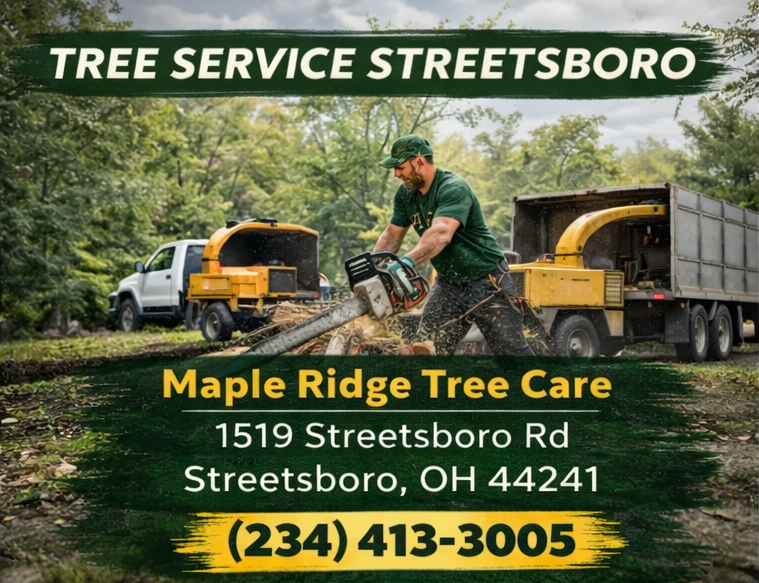
Trimming crews may move quickly with pole saws and chainsaws to “shape” a canopy. Pruning adds closer inspection, more hand tools, and selective cuts that sometimes remove less wood while doing more good. -
When it goes wrong:
Poor trimming leads to flat topped trees, lion’s tailing (all the foliage removed from the interior and left on ends), and sun scorch. Poor pruning is usually about improper cuts and timing, which can invite decay or pests.
The best tree service in Streetsboro will combine both. They address your immediate concerns about clearance or looks, then build in pruning decisions that keep the tree stable and healthy.
Why the distinction matters more in Streetsboro than you might think
Our local conditions magnify both good and bad work. Heavy, wet snow and ice can cling to dense outer growth. If a tree has been trimmed repeatedly without regard for structure, the outer shell of branches holds more weight while the interior remains bare and weak. That is when you see big limbs peel away in January and February.
Summer thunderstorms rolling across Portage County hit from different directions. Limbs that have been allowed to grow long and overextended over a roof or driveway will swing more and have more leverage at the union. Proper pruning addresses that long before it becomes a 2 am emergency call for tree removal.
We also see specific species issues in Streetsboro:
Sugar and silver maples respond poorly to heavy top cuts. They send out long, weak water sprouts where they were hacked back. Correct pruning removes or shortens select limbs back to strong laterals instead of topping.
Ornamental pears, common in newer developments, love to split at the main crotch once they reach a certain size. Pruning while they are younger to thin and balance the crown can prevent those dramatic mid trunk failures.
Hemlocks and spruces respond better to light, consistent work. They should be pruned to maintain natural form, not sheared like a hedge, which leads to dead interior and thin outer growth.
If you hire a tree service that only offers rough trimming, you risk creating problems uniquely suited to our local stressors: wind, snow loads, and freeze thaw cycles.
Safety, liability, and when trimming is not enough
Sometimes homeowners in Streetsboro call a company for “just a trim,” but once we walk the property it becomes clear that pruning, or even tree removal, is the safer and more honest recommendation.
There are a few structural defects that trimming alone cannot fix. Large codominant stems with poor attachment, extensive decay at the base, or major root plate damage from construction are not cosmetic problems. Cutting back a few branches might reduce some sail effect, but it does not change the underlying risk of failure.
From a liability perspective, once you are aware that a tree is dangerous and you choose not to address it, you may share responsibility if it fails and causes damage. Insurance adjusters in our area look at whether a tree showed signs of trouble and whether a reasonable person would have taken action.
A reputable tree service in Streetsboro will explain when they are comfortable pruning and when they recommend tree removal streetsboro level work instead. It is not the most pleasant conversation, but it is far better than talking about it while pointing at a crushed truck or deck.
How professionals approach trimming vs. Pruning on an actual job
Consider a mature red maple hanging over a one story roof on a Maple Ridge side street.
A pure trimming mindset might lead to cutting back every branch that extends over the roof to create a clean vertical wall of foliage. The tree looks neat from the ground, but the cuts are often made mid branch, leaving stubs and large wounds. New shoots explode from those cut points, reaching out again within a couple of seasons, but now they are attached weakly and closer to the wound.
A pruning mindset looks first at which limbs are truly problematic. The arborist follows those limbs back to natural unions where they can be removed or shortened to a strong lateral. Instead of cutting half the crown, they make fewer, more strategic cuts. The result still clears the roof, but it maintains a natural canopy line and healthier attachments.
On the same property, you might also have a young oak near the sidewalk. Here, pruning includes training cuts to establish a good central leader, spacing main branches vertically up the trunk, and raising the canopy slowly over time. A trimming only approach might ignore inner structural issues and simply lift the lowest branches in one visit, leading to an unbalanced, leggy tree.
This difference in approach is what separates basic cutting services from a professional tree service. Streetsboro homeowners who plan to stay in their house for years tend to see the value once they experience both styles of work.
Seasonal timing in Streetsboro: when to trim and when to prune
You can trim lightly almost any time of year if you stay conservative. But for more substantial pruning, timing has a real impact in northeast Ohio.
Late winter into very early spring, before bud break, is ideal for many of our deciduous trees. The tree is dormant, disease pressure is lower, and wounds begin to seal as sap starts to flow. Structure is easier to see without leaves in the way. This is the window where Maple Ridge Tree Care and other local arborists schedule a lot of crown thinning, structural pruning, and weight reduction work.
Mid summer can work well for light touch up on vigorous species that put on a lot of growth once the weather warms. It can also be a safe time to remove branches that are shading roofs excessively, since the tree is actively photosynthesizing and can respond more quickly.
Late fall into early winter is a mixed bag. Once leaves are down, visibility improves again, but very cold snaps slow the tree’s ability to respond to cuts. Some species, such as oaks, have disease risks tied to certain seasons, so timing matters more than with others.
The second and final list here can serve as a simple seasonal guide for Streetsboro residents:
-
Late winter to early spring:
Best time for most structural pruning, crown cleaning, and reduction. -
Spring flush:
Limit work to removal of broken, dead, or clearly hazardous branches. -
Mid summer:
Good for light trimming, selective thinning, and correcting minor clearance issues. -
Late summer to early fall:
Use caution with heavier cuts. Focus on inspection and planning for winter work. -
Late fall to early winter:
Suitable for deadwood removal and some pruning, but watch species specific disease guidance.
If you are unsure, a quick call to a local tree service in Streetsboro can help you avoid cutting at the worst possible moment for a particular species.
Common mistakes homeowners make with trimming and pruning
Most of the serious problems I see in Streetsboro yards come from a few recurring habits, not from bad intentions.
Over thinning the interior is one of the biggest. People see sunlight streaming through after a crew “opens up” the tree and think it must be healthier. In reality, stripping out too much interior growth pushes all the foliage to the tips, lengthens branches, and sets up more breakage later. A modest amount of selective thinning is helpful. Taking out a third of the interior is not.
Topping is another mistake, especially with fast growing maples and ornamental trees under power lines or along the street. Cutting main leaders at a flat height causes a huge flush of weak shoots and invites decay into large, poorly sealed wounds. This almost always leads to more frequent trimming and higher costs, not less.
Improper cuts at random spots along a branch can leave long stubs or flush cuts against the trunk. Both interfere with how a tree seals off wounds. Correct pruning respects the branch collar, that slight swelling where a branch meets the trunk or a larger limb. Cutting just outside it allows the tree to form a proper callus.
Finally, using climbing spikes on trees that are being pruned, rather than removed, still happens with less experienced crews. Each spike hole is a wound. On a large tree, hundreds tree removal streetsboro streetsborotreeservice.com of those wounds can become entry points for decay. A professional tree service Maple Ridge Tree Care included, will climb with ropes or use a lift for pruning work, reserving spikes for tree removal only.
When pruning reveals the need for removal
Sometimes the deeper inspection that comes with proper pruning uncovers conditions that were not obvious from the ground.
A hollow sound when tapping the trunk with a mallet. Fruiting bodies of decay fungi at the base. Major cracks in unions that were hidden inside the canopy. Severely girdling roots from past planting errors.
In those cases, the ethical move is to talk openly about tree removal streetsboro level action, rather than continue to prune a tree that is no longer structurally sound. Homeowners are often surprised because the upper canopy might still look green and full. Internal decay can progress for years before visible decline.
Removal decisions factor in where the tree stands. A weakened tree leaning over an open back field might be watched longer. The same tree over a bedroom or neighbor’s driveway is a different level of risk.
If removal is chosen, good planning still matters. Directional felling, crane work in tight backyards, and safe rigging over roofs are all parts of professional tree service. Streetsboro lots can be narrow, with fences, sheds, and overhead wires that complicate the job. This is where experience protects both property and workers.
Choosing the right kind of service in Streetsboro
Not every job needs a certified arborist, but certain signs should push you toward a higher level of expertise.
If your trees are young and you just need basic shaping away from the house, a straightforward tree trimming visit from a reputable local company might be enough, as long as they follow sound pruning practices. On the other hand, mature oaks, tall pines within fall distance of structures, and any tree with visible defects deserve a more careful eye.
When you talk to a tree service in Streetsboro, listen to how they use the words “trimming” and “pruning.” If everything is “just trimming,” and the estimate is given without looking up into the canopy or walking all sides of the tree, that is a sign of a production mindset focused on speed, not long term health.
Ask how they plan to access the tree, which cuts they consider essential, and how they handle debris. A company that treats pruning as a craft will explain their reasoning and might suggest a multi year plan rather than a one time heavy cut.
Maple Ridge Tree Care, as a local example, often balances immediate trimming requests with suggestions for periodic structural pruning. That might mean doing less all at once, but building a healthier canopy over a few visits.
Practical advice for Streetsboro homeowners
The best way to think about your trees is the way you think about your roof or furnace. Maintenance costs something each year, but neglect costs far more once failure occurs.
Walk your property twice a year. After the late winter storms and again after the heavy summer growth. Look for branches scraping roofs, limbs hanging over neighbor structures, mushrooms at the base of trunks, cracks, and deadwood. You do not have to diagnose everything, only notice changes and patterns.
When you call for tree service, be clear about your goals, but also open to hearing when pruning should take priority over cosmetic trimming or when removal might be the safer choice. A good company will respect your budget and timeline while still protecting your property and the tree’s long term health.
Understand that “taking more off” is not always the answer. Sometimes the best work you can do for a tree is measured, careful pruning that leaves plenty of foliage intact and focuses on a few key structural improvements.
Over time, this approach gives you what most Streetsboro homeowners really want: trees that look naturally well kept, stay off the roof, let enough light into the yard, and stand up better to the kind of storms and winters we see here.
Trim when you need to for appearance and clearance. Prune when you want your trees to stay safe, strong, and worth the space they occupy. And when in doubt, lean on experienced eyes rather than a chainsaw alone.
